

Founded in 1908, General Motors Company (GM) is a multinational corporation based in Detroit, Michigan. Over the years, GM has established itself as a key player within the global automotive industry, encompassing iconic car brands such as Chevrolet, Buick, GMC, and Cadillac.
GM’s vehicle innovations coupled with a strong global presence have allowed it to claim a significant market share. The company manufactures cars and trucks in 30 countries and its vehicles are sold in approximately 200 nations worldwide.
GM's journey has had its fair share of twists and turns. When the global financial crisis hit in 2008, GM had to file for bankruptcy. However, it successfully restructured its operations and repaid its government loans ahead of schedule, resurging as a more streamlined and profitable company.
While historically GM has been a manufacturer of traditional gasoline-powered vehicles, in recent years the company has made strategic moves to develop electric vehicles and autonomous technology, demonstrating a commitment to the future of mobility. It unveiled its all-electric Hummer model and has made a commitment that 40% of its U.S models will be battery-electric vehicles by the end of 2025.
GM's innovation extends beyond standard passenger vehicles. The company spearheads development and production of self-driving cars through its subsidiary, Cruise LLC. GM also designs and builds engines and transmissions, and sells parts for its own vehicles and other automakers.
GM takes corporate social responsibility seriously and has made significant strides integrating sustainable business practices into their operations. In 2020, GM announced its ambition to become carbon neutral by 2040 and aims to eliminate tailpipe emissions from new light-duty vehicles by 2035.
GM has played a significant role in shaping the automotive industry and continues to influence its future. The company’s commitment to advanced technologies, sustainability, and innovative business practices highlights its ongoing contribution to the global motor industry.
In the financial year 2020, GM reported a net revenue of nearly $122 billion and employed about 155,000 people. Despite the global challenges introduced by the COVID-19 pandemic, GM continues to evolve and adapt to maintain its status as a leading player in the automotive industry. Whether it’s reaching milestones in electric vehicle development or expanding into new markets, GM continues to drive forward in its pursuit of progress.
Income statement
Balance sheet statement
Cash flow statement
Current assets / Current liabilities
Equity / Debt / Cash
Dividends

This article covers key developments for Tesla and Elon Musk over the past week, including a new teaser for the Tesla Roadster and the start of Semi truck volume production. It also highlights scrutiny over Tesla's Full Self-Driving system exceeding speed limits in Brussels and the announcement of Grok AI integration into Tesla vehicles.

Envestnet Asset Management Inc. increased its stake in General Motors Company (GM) by 5.6% during the second quarter, now owning over 1.4 million shares valued at $108.47 million. Several other institutional investors also adjusted their holdings in GM, with hedge funds and institutional investors collectively owning 92.67% of the stock. The article also provides financial details, recent earnings, dividend information, analyst ratings, key news, and insider trading activity for General Motors.

Lockheed Martin received its first shipment of critical Patriot missile components from General Motors' defense unit, only 22 days after signing a manufacturing agreement, a process that traditionally takes months or years. This partnership aims to boost Lockheed's missile production amid high global demand, offering GM an opportunity to expand its defense business. While promising, the long-term impact on both companies' financial results depends on GM's ability to scale production and Lockheed's successful execution of its expansion plans.

Honda and Acura are reportedly developing new, larger three-row SUVs, with internal project names "Pilot XXL" and "Acura XL," to compete with models like the Toyota Grand Highlander and Lexus TX. These vehicles, along with the next-generation Acura MDX, could be produced at a proposed new factory in Ohio, expanding Honda's North American manufacturing capacity. While Honda calls the reports speculative, these larger SUVs would offer more interior space, potentially appealing to families seeking additional luggage room.
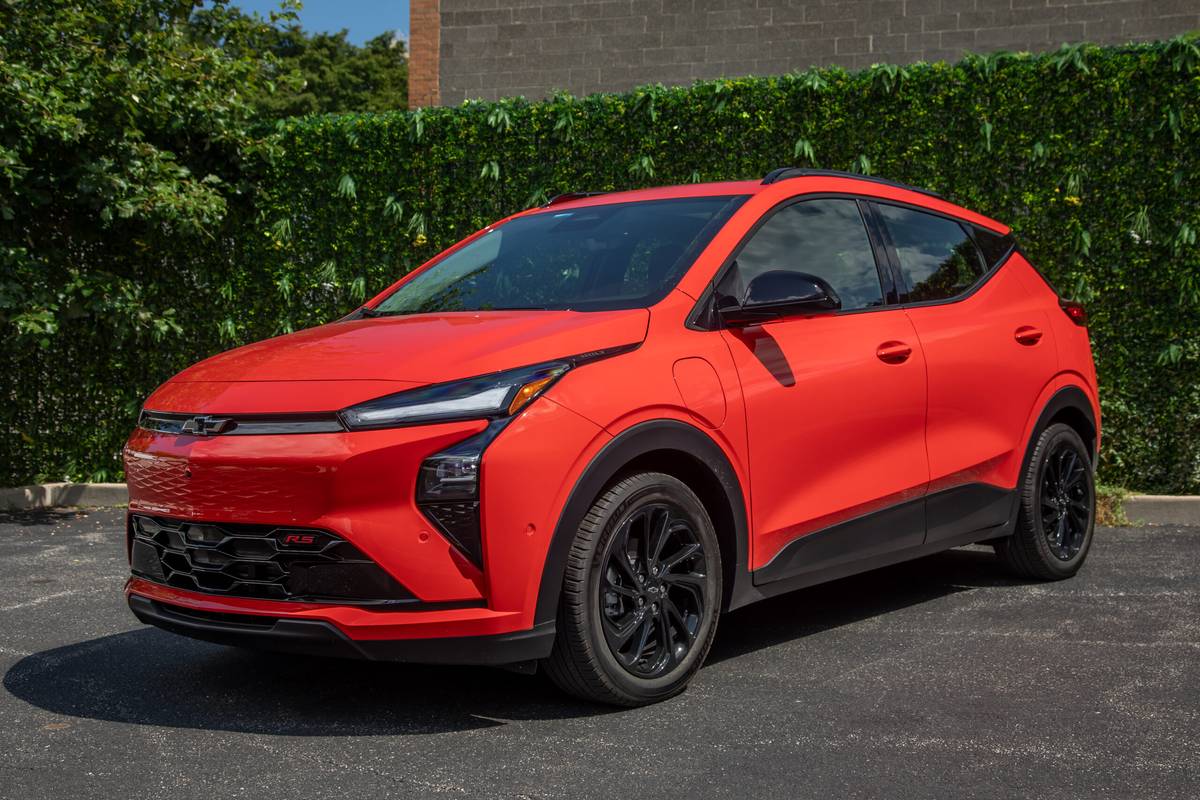
The 2027 Chevrolet Bolt re-emerges as an affordable EV with a starting price under $30,000, but its value proposition diminishes with added options that push its price near that of a Tesla Model 3. While offering a respectable range, faster home charging, and GM's Super Cruise, it lacks Apple CarPlay/Android Auto and has a "skittish" ride quality. The Bolt is a good choice at its base price but faces stiff competition when optioned up.

General Motors has revealed its next-generation engine lineup for the 2027 Chevrolet Silverado and GMC Sierra pickups, featuring four distinct engine types. Each engine is designed to meet specific customer needs, offering varied horsepower, torque, and capabilities. The lineup includes two V-8 options (5.7L L76 and 6.6L L78), an enhanced 2.7L TurboMax, and a 3.0L Duramax Turbo-Diesel, emphasizing GM's strategy to provide powertrains tailored for different uses like towing, hauling, and daily commuting.
VinFast Auto Ltd. is performing strongly in Vietnam, having sold over 154,703 EVs in Jan-Aug 2026, tripling Toyota's sales in the region. However, the company faces significant challenges abroad due to competition from larger rivals like BYD and a tightening credit market in Vietnam, which is impacting demand. Despite large losses, VinFast is improving its cost structure, with a goal to break even in Vietnam by end-2027, supported by its founder and Vingroup.
MP Materials is nearing commercial rare earth magnet shipments to General Motors, signifying a strategic shift from raw material production to higher-value manufacturing. This move is expected to significantly impact its financial structure and long-term contracts. Analysts project substantial revenue and earnings growth by 2029, though execution risks and differing views on demand erosion present challenges to this optimistic outlook.

General Motors has begun installing EV batteries with cathode material made entirely from recycled nickel, cobalt, and manganese into customer vehicles like the Cadillac Lyriq and Chevrolet Silverado EVs. This pilot program, using end-of-life GM battery packs processed by Cirba Solutions, aims to integrate sustainability into GM's long-term EV strategy and supply chain resilience. The initiative supports cost control and more robust supply for critical minerals, which is essential for GM's goal of increasing EV contributions to higher-margin revenues.