

PTC Inc., formerly known as Parametric Technology Corporation, is an American computer software and services company that specializes in 2D & 3D design software, product lifecycle management, and service management solutions. The company was founded in May 1985 by Samuel P. Geisberg and is currently headquartered in Boston, Massachusetts.
PTC Inc. has contributed significantly to the technology industry over the years, particularly in the field of digital transformation solutions. They have a broad and diverse range of offerings, including the development of Internet of Things (IoT) and Augmented Reality (AR) solutions besides the more traditional CAD (Computer-Aided Design) and PLM (Product Lifecycle Management) software.
Among their most well-known products is the PTC Creo, a suite of design software utilized by many designers and engineers, offering scalability in the realm of multidisciplinary design. Another signature product is the Windchill, a robust PLM software that helps organizations in managing their product development processes. Furthermore, PTC is also known for its ThingWorx platform, a complete, end-to-end technology platform designed for industrial IoT that enables the development and deployment of powerful applications and augmented reality experiences.
Over the years, PTC has been successful in establishing a global footprint, expanding its product and service offerings across many different industries such as automotive, aerospace, defense, retail, electronics, life sciences, and others. They have several offices across the globe, further establishing their international presence and their dedication to serving a broad range of clientele.
PTC's mission is to bridge the physical and digital worlds, enabling corporations to design, operate, and service products that are smart and connected. By providing technology that enables its customers to achieve product and service advantage, PTC Inc. is establishing itself as a key player in the digitization era, helping businesses adapt to the fast-changing technological landscape.
The company has received numerous awards over the years, testifying to its dedication and commitment towards pushing the boundaries of digital transformation. PTC continues to innovate and evolve, focusing on meeting the needs of a world increasingly dependent on technology. With their footprint secure in the tech industry, PTC Inc. looks set to continue shaping the future of digital productivity and connectivity.
Income statement
Balance sheet statement
Cash flow statement
Current assets / Current liabilities
Equity / Debt / Cash
Dividends
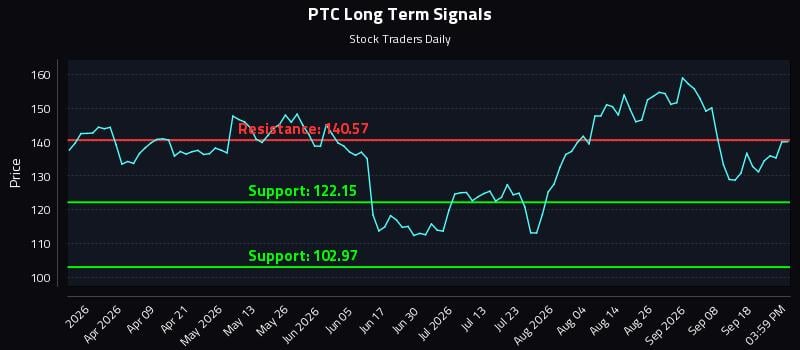
This article analyzes PTC Inc. (PTC) with AI-generated trading strategies and risk zones. It highlights a strong near-term sentiment potentially challenging weaker mid and long-term trends, and identifies an exceptional risk-reward short setup. The analysis provides specific entry, target, and stop-loss levels for position trading, momentum breakout, and risk hedging strategies.
PTC Inc. (PTC) shares rose 3.49% to $140.00 on Tuesday, outperforming a mixed stock market where the S&P 500 remained mostly unchanged and the Dow Jones Industrial Average fell. Despite the gain, the stock closed 32.53% below its 52-week high of $207.49 reached on September 23rd. The article highlights PTC Inc.'s strong performance relative to its competitors on this particular trading day.

PTC (NASDAQ:PTC) is back in the market spotlight due to the increasing relevance of manufacturing digitization, which ties design and lifecycle software to industrial efficiency. The article highlights PTC's distinct product-development and industrial software perspective, emphasizing that its operational model and specific business angle are more important than broad sector trends. The next crucial step for PTC will be providing company-specific evidence to confirm whether this renewed attention translates into operational substance.
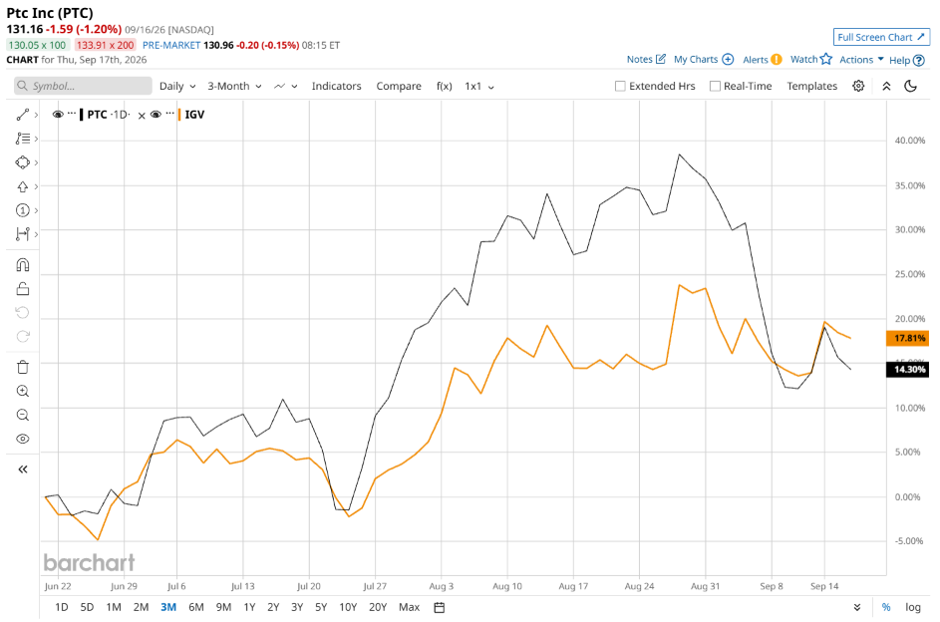
PTC Inc. (PTC), a large-cap software company valued at $14.2 billion, has underperformed its industry peers and the iShares Expanded Tech-Software Sector ETF (IGV) over the past year due to top-line growth headwinds, lowered revenue guidance, insider selling, and analyst downgrades. Despite its strong market position and technological expertise, the stock has fallen significantly from its 52-week high. Wall Street analysts maintain a "Moderate Buy" rating, anticipating a potential upside of 31.8%.

PTC's stock is drawing investor attention after its Creo CAD and Windchill PLM platforms were chosen by Fisica Applied Technologies. Despite a recent 90-day share price gain, the stock is down over 20% year-to-date, but a fair value analysis by Simply Wall St suggests it is 22% undervalued at $173.35 compared to its recent close of $135.89. The company's transition to SaaS models is expected to improve free cash flow and operating margins, though ongoing transition friction and competition pose risks.

Ernexa Therapeutics has appointed Robert J. Spiegel, M.D., FACP, to its Board of Directors. Dr. Spiegel brings extensive experience as a physician, biopharmaceutical executive, and drug developer, with a significant career at Schering-Plough Research Institute and PTC Therapeutics. His expertise spans oncology, clinical development, regulatory strategy, and pharmaceutical leadership, and he currently serves on the boards of several other biotechnology and pharmaceutical companies.

PTC Inc (PTC) stock saw a 4.5% increase, yet remains significantly undervalued with a GF Value™ of $216.73 against its current price of $136.65, representing a 36.9% discount. Despite a strong GF Score™ of 86/100, indicating solid fundamentals in profitability and growth, the company faces concerns due to consistent insider selling and recent stock performance declines. Investors are advised to consider these risks alongside the potential for growth.
Tyler Technologies (TYL) saw its stock rise by 5.1% on Monday, closing at $353.81 per share, as part of a broad-based rally in software-application stocks. The increase was driven by sector-wide momentum, with peers like PTC and DOCU also gaining, rather than company-specific news. This synchronized movement suggests investors are making sector-level bets on software companies.