

HeartBeam, Inc. is a medical technology company that specializes in cardiac monitoring solutions. The company is traded as BEAT on the stock exchange, highlighting the centrality of its heart monitoring mission. Founded in 2012, HeartBeam, Inc. differs from conventional cardiac monitoring companies with their innovative approach to patient care, focusing primarily on offering real-time heart monitoring to patients, regardless of their location.
The company's central product is a proprietary, FDA-approved ECG-monitoring device capable of providing real-time heart rate and EKG data. It's a transformative solution for the cardiology field, enabling doctors to monitor their patients' heart health 24/7 remotely. This means patients do not have to be in a hospital or doctor's office to have their heart health continuously monitored. Instead, the HeartBeam device allows patients to continue with their regular life routines, without compromising on the quality of their healthcare.
Moreover, the device is user-friendly, making it comfortable for patients to wear and easy to operate, while the data it provides is accurate, consistent, and reliable. It can detect any irregularities in heartbeat patterns, prompting quick action and potentially saving lives even before apparent symptoms manifest.
However, the main strength of HeartBeam, Inc. lies in the integration of its device with advanced telemedicine practices. This synergistic approach offers a robust line of defense against cardiac conditions, dramatically reducing the time between the onset of symptoms and the delivery of necessary medical intervention. With the support of its technology, HeartBeam facilitates real-time communication between patients and medical professionals, ensuring immediate response to changes in patients’ cardiac behavior.
Despite being a relatively young company, HeartBeam has shown a positive trajectory in the health tech industry. Their commitment to improving patient care through innovative, remote monitoring solutions has garnered them a rapidly growing number of users, which in turn has stimulated significant stock market interest in BEAT.
All in all, HeartBeam Inc. represents the cutting-edge intersection of medical technology, patient care, and telecommunication. By reshaping how cardiac care is managed and delivered, HeartBeam could be a game-changer, not only in the heart health sector but in the broader scope of patient-centered healthcare solutions. As the company moves forward, it is expected to continue pushing the boundaries and setting new benchmarks for integrated healthcare systems.
Income statement
Balance sheet statement
Cash flow statement
Current assets / Current liabilities
Equity / Debt / Cash
Dividends

This article details how four stocks—Once Upon a Farm (NYSE:OFRM), Precigen (NASDAQ:PGEN), PMGC Holdings (NASDAQ:ELAB), and HeartBeam (NASDAQ:BEAT)—experienced significant declines of up to 27% due to specific company-related events. Once Upon a Farm fell following a product recall, Precigen dropped after a rival treatment received FDA approval, PMGC Holdings saw its stock decline despite a SPAC deal announcement, and HeartBeam decreased after presenting heart attack study data at a conference. The report examines the individual circumstances behind each stock's downturn, providing financial details and market reactions.

HeartBeam (NASDAQ: BEAT) announced positive results from its ALIGN-ACS pilot study, demonstrating that its patient-recorded 3D ECG system is as accurate as a standard 12-lead ECG for heart attack assessment. The study, presented at TCT 2026, showed higher specificity and comparable sensitivity for the HeartBeam device, with 100% patient success in self-recording. These findings support the potential for remote heart attack assessment and will inform a U.S. pivotal study in Q1 2027.
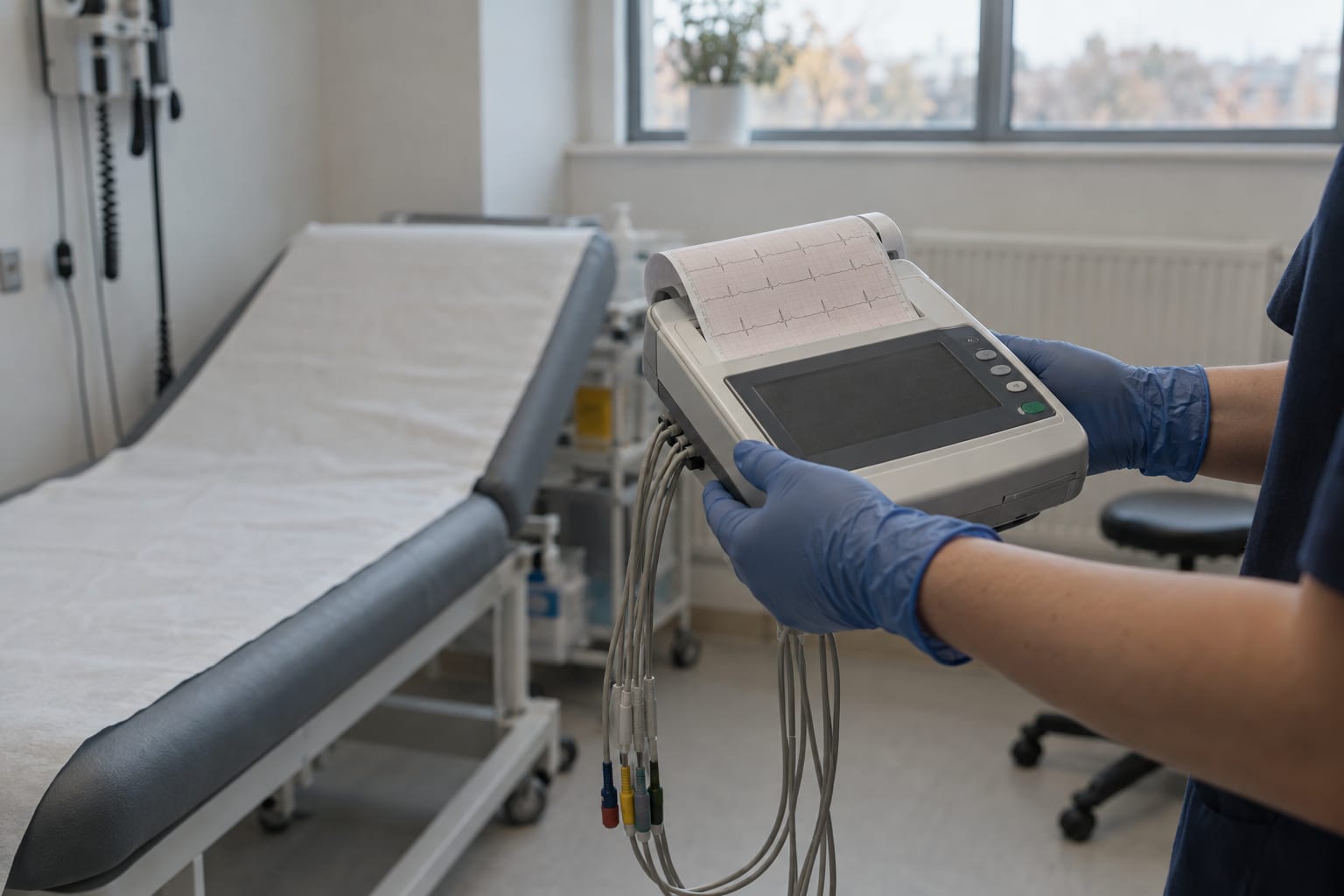
HeartBeam, Inc. announced results from a 132-patient pilot study comparing its portable ECG system with standard 12-lead ECGs for acute coronary syndrome assessment. The study showed HeartBeam's device achieved higher specificity (81.8% vs. 71.4%) but slightly lower sensitivity (60.2% vs. 63.0%). The company plans a U.S. pivotal trial in Q1 2027 to further investigate its heart attack assessment technology, which has FDA Breakthrough Device Designation.