

Capricor Therapeutics, Inc. (CAPR), is a renowned biotechnology company that is dedicated to the discovery, development, and commercialization of first-in-class cell- and exosome-based therapeutics for treating and preventing a multitude of diseases. Among the diseases targeted by the company include Duchenne muscular dystrophy (DMD), cardiac tissues damaged through acute myocardial infarctions, and complications arising from COVID-19.
The California-based company's proprietary lead candidate, CAP-1002, an "off-the-shelf" cardiac cell therapy, has been spotlighted as a promising treatment for patients afflicted with DMD; a fatal genetic disorder characterized by progressive muscular weakness due to the breakdown and loss of muscle cells. Currently, there are no universally effective treatments for DMD, making the progress of CAPR's potential breakthrough highly noteworthy.
Moreover, this versatile revolutionary technology is also believed to have applications in repairing heart tissues that are damaged by poor blood flow, usually a result of heart attacks. Besides, CAPR’s research has been diverted towards combating COVID-19 through their exosome technology platform, named CAP-1002, to block ACE2 and S-protein interaction, which is a key gateway used by the COVID-19 virus to get into cells.
Since its inception, CAPR has been at the forefront of innovative cellular therapies and is committed to groundbreaking research in regenerative medicine. Its efforts to design and develop unique treatments to address severe medical conditions with unmet medical needs have positioned it as a leader in its field. To this end, the company collaborates with various scientific and medical communities worldwide to share knowledge, leveraging its resources and expertise in a global effort to combat devastating illnesses.
Furthermore, demonstrating its commitment to excellence, CAPR's work has garnered support from respected sources such as the National Institutes of Health and the California Institute for Regenerative Medicine. It has also entered strategic licensing agreements with tech giants like Cedars-Sinai Medical Center, further proving its dedication to innovation, collaboration, and groundbreaking advancements in biopharmaceutical sciences.
Capricor Therapeutics, Inc. is publicly traded on NASDAQ under the symbol CAPR, emphasizing its position as a key player in the biotechnology industry. The company's robust portfolio and extensive experience in cell biology and genetic therapies make it a strong contender in the ever-evolving healthcare industry. In the hands of a seasoned team of medical professionals, researchers, and business leaders, CAPR continues to forge new pathways in cell and gene therapy, aiming to make significant contributions to science and society.
Income statement
Balance sheet statement
Cash flow statement
Current assets / Current liabilities
Equity / Debt / Cash
Dividends

Capricor Therapeutics Inc. (NASDAQ: CAPR) shares are trading higher despite reporting a wider-than-expected loss of 73 cents per share for the third quarter. The company announced significant progress on its regulatory filing and launch readiness for deramiocel, its Duchenne muscular dystrophy treatment, which has an FDA decision date of Nov. 22, 2026. The stock is up over 15% following these updates.

Capricor Therapeutics (CAPR) saw its stock rally after hours as the company reaffirmed confidence in its Duchenne muscular dystrophy (DMD) therapy, deramiocel, during its third-quarter earnings call. The FDA is set to decide on deramiocel's approval for preserving upper-limb function in DMD patients by November 22, with Capricor stating its Biologics License Application is in final review. Despite a widened net loss and increased operating expenses, the company is advancing launch preparations and pursuing independent commercialization, while also reducing its workforce by 10%.
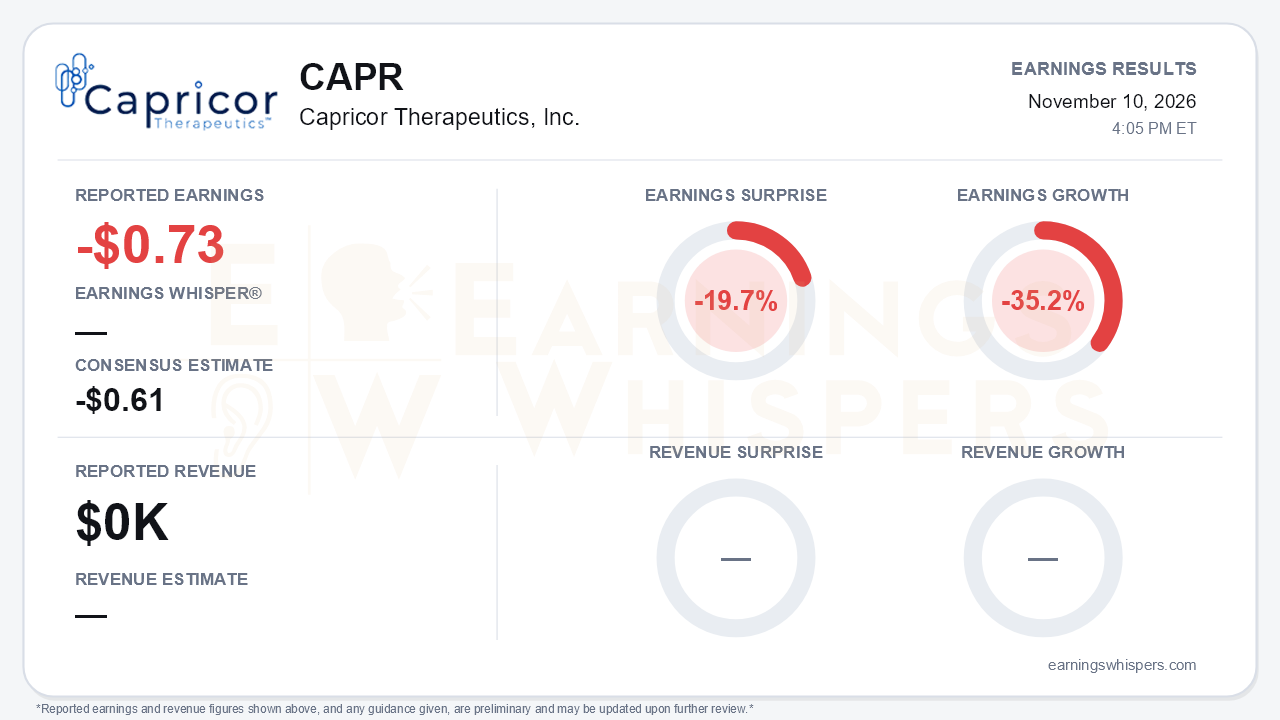
Capricor Therapeutics reported a third-quarter loss of $0.73 per share, missing estimates, as pre-launch spending on Deramiocel climbed. The company enters a binary FDA decision on November 22, 2026, with a stronger data package but a narrower proposed indication for upper-limb impairment in patients over nine, following a previous negative advisory committee vote. This situation heightens the stakes for the upcoming FDA decision given accelerating spending and declining cash reserves.

Capricor Therapeutics is in the final stages of FDA review for its BLA for deramiocel, targeting upper limb impairment in Duchenne muscular dystrophy patients, with a PDUFA date of November 22, 2026. The company submitted a major amendment including 24-month open-label extension data from HOPE-3 and integrated efficacy data, reporting a net loss of $42.7 million for Q3 2026 due to pre-commercial activities. Capricor is preparing for commercial launch with a ready San Diego manufacturing facility and is managing a contractual dispute with NS Pharma.

Capricor Therapeutics announced that new cardiac data from its HOPE-3 Phase 3 trial for Deramiocel in Duchenne muscular dystrophy received an American Heart Association pediatric cardiology research award. While the overall cardiac endpoint missed statistical significance, a prespecified subgroup of patients with cardiomyopathy showed a 2.8-percentage-point advantage in heart pumping function, and scar imaging indicated fewer newly scarred heart segments. The Biologics License Application for Deramiocel remains under FDA review with a target action date of November 22, 2026.
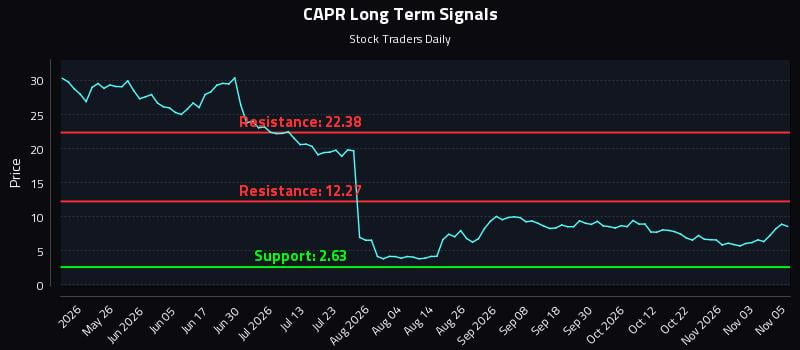
This report from Stock Traders Daily analyzes Capricor Therapeutics Inc. (NASDAQ: CAPR), identifying a mid-channel oscillation pattern and a strong near to mid-term sentiment that could shift a weak long-term outlook. It presents three AI-generated trading strategies—Position Trading (long), Momentum Breakout (breakout), and Risk Hedging (short)—with specific entry, target, and stop levels. The analysis also highlights an exceptional 241.0:1 risk-reward short setup targeting significant downside.