

Colgate-Palmolive Co. (CL) is an influential global consumer product giant with a history that spans more than two centuries. The company, based in New York, was formed by a soap-making business merger in 1928. Today, it operates its businesses in two product segments: Oral, Personal and Home Care, and Pet Nutrition.
The Oral, Personal and Home Care segment covers the vast majority of the company's total revenue, encompassing oral products like toothpaste and toothbrushes, bar soaps, liquid hand soaps, shower gels, deodorants, shampoos, and more. This segment has been established as a market leader in many countries with major brand names like Colgate, Palmolive, Sanex, and Softsoap.
The other business segment, Pet Nutrition, is represented by the well-known label 'Hill's', which provides a line of prescription diet and science diet products for dogs and cats. These products are sold by veterinarians and specialty pet retailers worldwide.
Despite being an American company, the majority of Colgate-Palmolive's sales are generated from operations outside the United States. The company’s product portfolio is diversified across several geographies, with an especially strong presence in emerging markets which continue to be significant growth potential areas.
Over the past decades, Colgate-Palmolive Co. has demonstrated an impressive sustainability effort. The company’s strategy focuses on three areas: People, Performance, and Planet, which involves using natural resources responsibly, reducing the carbon footprint of their products, and improving the overall health and well-being of communities.
As of today, Colgate-Palmolive is renowned for its commitment to quality, performance, and value for money. It stands tall amongst its competitors in the consumer products industry, demonstrating strong customer loyalty, coupled with a widely recognized brand portfolio.
Income statement
Balance sheet statement
Cash flow statement
Current assets / Current liabilities
Equity / Debt / Cash
Dividends
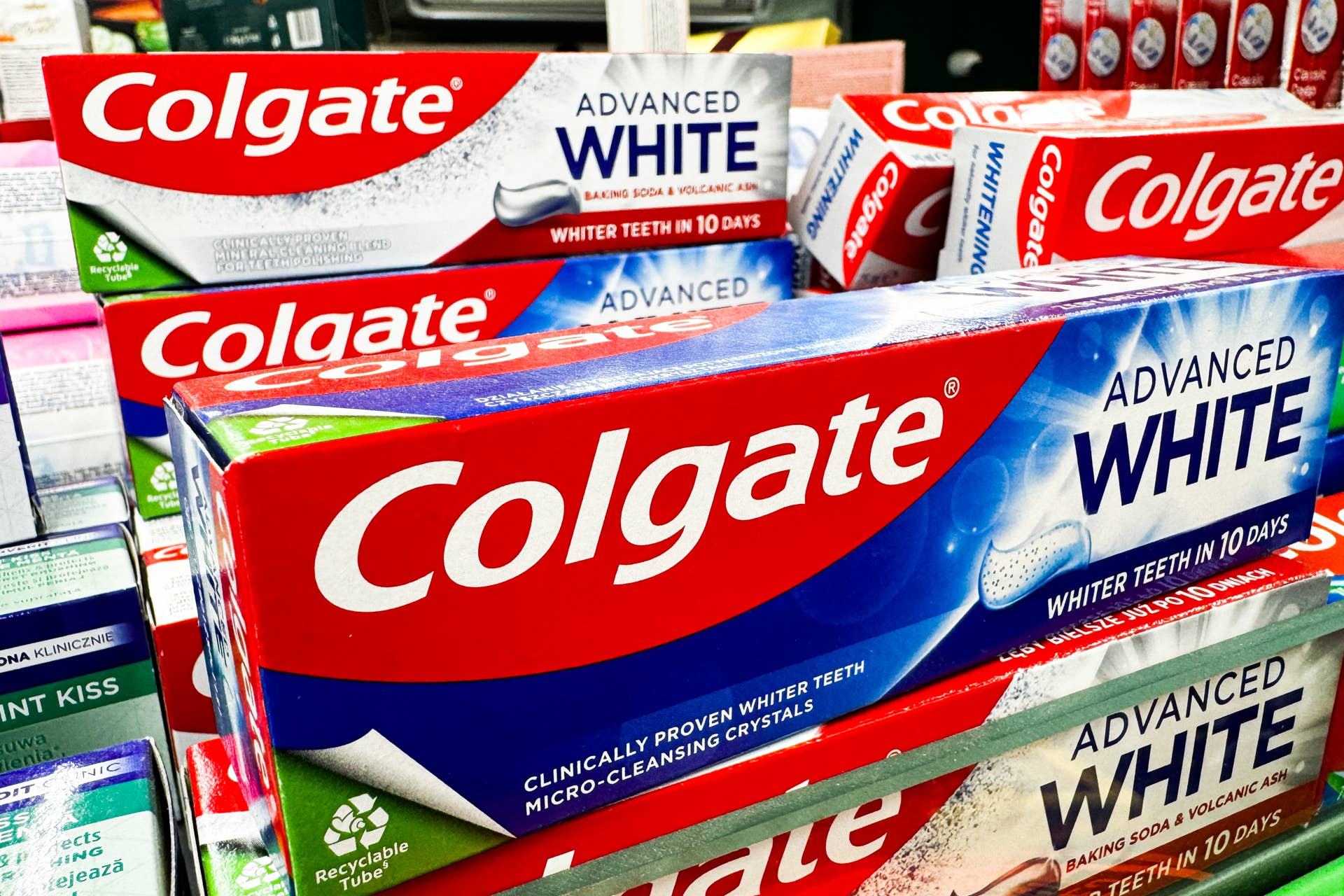
Colgate-Palmolive is considering further price increases due to rising manufacturing and transportation costs, despite experiencing weaker demand and declining sales in the U.S. during the third quarter of 2026. The company is also focusing on a strategy to introduce more expensive, premium products and enhance its marketing efforts to attract customers and improve profitability. While overall global revenue increased, North American sales fell, prompting a shift towards higher-value offerings and a cautious outlook on inflationary pressures for 2027.

This article compares Kimberly-Clark (KMB) and Colgate-Palmolive (CL) as dividend stocks, focusing on which would pay more over a decade. KMB currently offers a higher yield (4.6% vs. 2.2%) but has a tighter dividend payout ratio, especially after its recent Kenvue acquisition. CL, while having a lower yield, boasts a more robust cash flow coverage for its dividend. Despite KMB's integration risks, the analysis concludes that its higher initial yield would likely result in greater total dividend payments over 10 years, assuming both companies maintain their historical dividend growth rates.

Colgate-Palmolive (CL) has seen a 41.8% stock return over the past 5 years, prompting questions about whether its cash flow supports this gain. A Discounted Cash Flow (DCF) model estimates the company's intrinsic value to be meaningfully above its current $98.09 share price, based on steady growth in free cash flow and recent strong earnings. However, different narratives exist, with some analysts viewing the stock as fairly valued due to premium products and emerging markets, while others see it as 13% overvalued, citing concerns about profit normalization and valuation multiples.

Priyam Kanchwala has been promoted to Strategy and Brand Experience Media Lead at Colgate-Palmolive (India) Ltd., moving up from Senior Manager – Integrated Media. In this new capacity, Kanchwala will oversee strategic media initiatives and enhance brand experiences through innovative and consumer-focused media strategies. Kanchwala brings extensive experience in media planning, brand building, and digital strategy from previous roles at Marico Limited, Madison World, and Mediaedge:cia.

Priyam Kanchwala has been appointed as the strategy and brand experience media lead at Colgate-Palmolive (India) Ltd, effective November 2026. He brings extensive experience from both agency and FMCG marketing roles, having previously served as senior manager of integrated media at Colgate-Palmolive and media manager at Marico Limited. His career also includes significant time at Madison World, where he specialized in media strategy for FMCG brands.

Lorrie Norrington, a Director at Colgate-Palmolive (NYSE: CL), recently exercised company stock options for 4,170 shares, realizing a value of $108,711. The options were exercised at $71.56 per share, while Colgate-Palmolive shares were trading at $97.63, reflecting a 0.32% decline on the day of the report. The article also provides a detailed financial overview of Colgate-Palmolive, including revenue growth, profitability metrics, debt management, and valuation metrics, alongside an explanation of the significance of insider transactions for investors.

Broadcom Inc. (NASDAQ: AVGO) is currently trading 32% cheaper than Colgate-Palmolive Co. (NYSE: CL) based on forward earnings, despite Broadcom's expected significant earnings growth. This valuation gap, where Broadcom's forward P/E is 0.68 times Colgate's, is seen by analysts at HSBC and Cantor Fitzgerald as unsustainable, suggesting a potential rebound for chip stocks. The disparity is attributed to a "violent rotation" in equities and concerns about financing for AI infrastructure, leading to a temporary premium for consumer staples.

The investment thesis for Colgate-Palmolive (India) (500830) has been reaffirmed, with a renewed focus on premiumization in oral care, driving habit change, and optimizing channel mix. While the fair value saw a slight decrease of 2.61% to ₹1,893.42, the long-term revenue growth assumption has modestly increased. The company is balancing cost optimization with higher advertising spend, accepting some margin pressure for faster top-line growth.