

Capital One Financial Corporation (COF) is a renowned banking company that specializes in credit cards, auto loans, banking, and savings accounts. With its headquarters in McLean, Virginia, COF is one of the members of the Fortune 500 with branches sprinkled across the United States, Canada, and the UK. The company was established in 1994 by Richard Fairbank and Nigel Morris as a spin-off of Signet Banking Corp's credit card division and is currently one of the top ten largest banks in the US by assets.
Over the years, Capital One's commitment to leveraging technology and data has played a key role in its progression. The business model of COF was unique as it pivoted to the use of data collection to personalize loan offerings tailored to consumers, which was quite revolutionary in the industry at that time. This strategy boosted the company's success and helped position it as a front runner in the financial services industry.
The company’s primary business segments include Credit Card, Consumer Banking, and Commercial Banking. The Credit Card segment, which offers domestic and international card lending, generates most of the company’s income. The Consumer Banking segment includes operations related to the company’s retail bank, such as deposit gathering and lending for homes and automobiles. Meanwhile, the Commercial Banking segment includes lending, deposit gathering, and treasury management services to commercial real estate and corporate clients, among others.
Capital One was also one of the first to initiate the mass marketing of credit cards in the 1990s which was largely successful and contributed to the rise of their credit card business. Despite setbacks during the 2008 financial crisis, where the company suffered due to an increase in loan defaults, it recovered by the purchase of Chevy Chase Bank, which dramatically increased Capital One's deposit base.
Capital One is also renowned for its community outreach programs and commitment to corporate social responsibility. They run a program called "Investing for Good", which invests in local communities to stimulate economic growth, including affordable housing, and supporting small businesses. This program has made a notable contribution to community development and has enhanced the company's reputation for corporate citizenship.
As of today, Capital One continues to adapt and evolve by embracing digital transformation in the banking industry. It is known for its innovative banking solutions, making banking more accessible through digital means. The company combines its physical network presence with digital applications to provide customers with a seamless and convenient banking experience.
In conclusion, Capital One Financial Corporation (COF) stands as an emblematic figure in the banking industry owing to its innovative, data-driven approach toward personalized banking, incorporation of cutting-edge technology, strategic business decisions, and commitment to community investment.
Income statement
Balance sheet statement
Cash flow statement
Current assets / Current liabilities
Equity / Debt / Cash
Dividends

Berkshire Hathaway has reduced its stakes in Capital One Financial Corporation by 62% and also trimmed its holdings in VeriSign. This move comes as Greg Abel continues to rebalance the company's investment portfolio. The Washington Business Journal article highlights these changes, noting the ongoing shifts in Berkshire Hathaway's investment strategy.

Thousands of customers across the United States experienced problems accessing banking services and making payments due to a technical issue at JPMorgan Chase. A software bug in Chase's internal hardware systems slowed transaction processing, impacting transactions involving other major banks like Wells Fargo and Bank of America, and causing Zelle payment delays. Chase confirmed the issue was not cyber-related and that services were processing normally by Monday evening, though some delayed payments might still be pending.

Multiple American banks, including JPMorgan Chase & Co., Bank of America, Wells Fargo, Capital One, and U.S. Bancorp, experienced service outages on Monday, leading some users to speculate about a cyberattack. JPMorgan, however, ruled out a cyberattack, attributing the disruption to a software bug in on-premise hardware systems and assuring customers that their accounts and funds remained accessible. These banking issues follow recent widespread outages at Microsoft and a nationwide ground stop by the Federal Aviation Administration (FAA), causing retail users to note a "weird" coincidence of disruptions across industries.

Berkshire Hathaway, under Greg Abel's leadership, revealed its third-quarter 2026 investment changes, including a new position in Bending Spoons, owner of digital brands like AOL and Vimeo. The conglomerate also significantly increased its holdings in Lennar Class A and Class B shares by 99% and 86% respectively, while decreasing stakes in companies like Capital One Financial and VeriSign. Apple, American Express, and Coca-Cola remain its top three largest holdings.

Berkshire Hathaway has reduced its stakes in Bank of America and Capital One during the third quarter. Concurrently, the company initiated a new 4% stake in the Italian software technology firm Bending Spoons. These changes were detailed in a regulatory filing outlining Berkshire's U.S.-listed stock holdings as of September 30, which constitute the majority of its $335.5 billion equity portfolio.
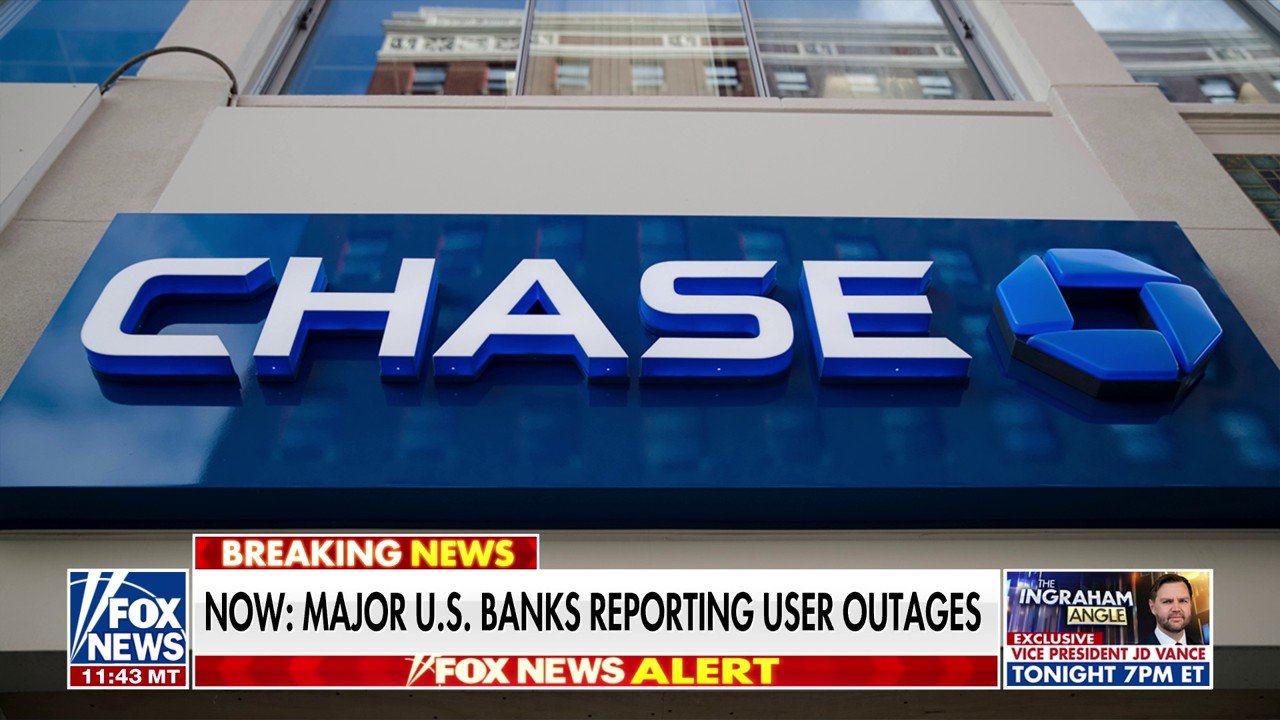
Several major U.S. banks, including Chase, Bank of America, Wells Fargo, and Capital One, experienced widespread online banking outages on Monday. This technical issue caused financial stocks to fall, with JPMorgan Chase, Bank of America, Wells Fargo, and Capital One seeing declines in their share prices. Chase acknowledged the problem, stating that transactions were taking longer than usual but customers still had access to their accounts.
Several major U.S. banks, including Bank of America, JPMorgan Chase, and U.S. Bank, experienced widespread service outages on Monday, with customers reporting issues accessing accounts and services. Chase Bank confirmed a technical bug, not a cyber issue, was causing delays in transactions. These outages follow a recent global service disruption experienced by Microsoft.

Sezzle's internal analysis revealed that 86% of Sezzle Up users who initially lacked a credit score obtained one within four months, provided they made on-time payments. Users starting with a credit score below 600 saw an average gain of 17.6 points in four months, outperforming comparable shoppers. The Sezzle Up program, which is free and opt-in, reports payment history to credit bureaus, offering an alternative path to building credit for the next generation of shoppers.