

Joby Aviation is an innovative company dedicated to the development and commercialization of aerial ride-sharing vehicles with zero emissions. The company was founded in 2009, headquartered in Santa Cruz, California, and led by the CEO and founder, JoeBen Bevirt. Joby Aviation operates using an ambitious, revolutionary vision to allow people to utilize air transportation as an everyday mode of transportation, ensuring everyone can take advantage of its cost-effective, efficient and eco-friendly technology.
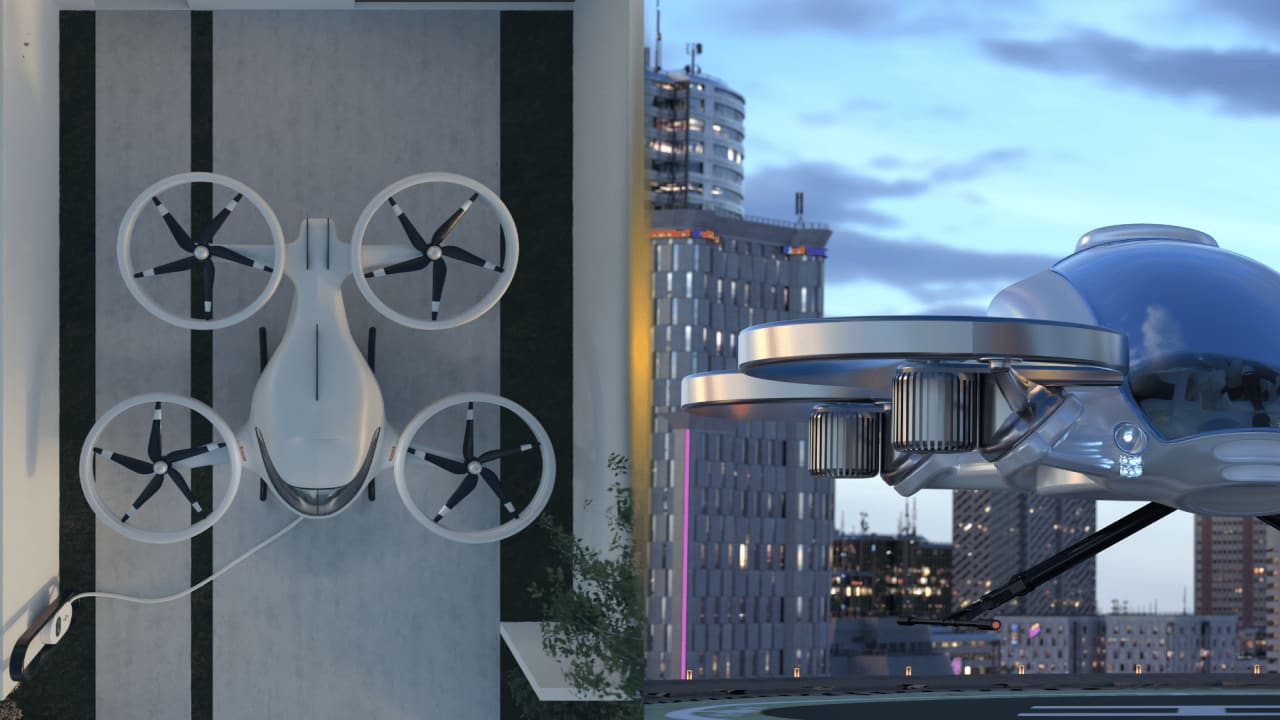
Joby Aviation's flagship vehicle is an electric vertical takeoff and landing (eVTOL) aircraft. This innovative design allows the vehicle to ascend like a helicopter and then transition to forward flight using its wing, allowing for much more efficient, quiet travel than traditional helicopters. The vehicle is capable of carrying four passengers and the pilot with a total range of 150 miles and a maximum speed of 200 mph.
The company not only focuses on the development of the aircraft but also on its integration within the urban landscape. Joby is planning to build a network of “skyports” based in key locations, providing the infrastructure necessary for its new mode of transportation to flourish.
In February 2021, Joby Aviation agreed to a reverse merger with Reinvent Technology Partners, a special purpose acquisition company (SPAC), after which it is publicly listed on the New York Stock Exchange under the ticker symbol "JOBY". This move allowed Joby Aviation to generate necessary capital for its continued growth and development.
Joby Aviation's groundbreaking work in the transportation sector has attracted significant attention and high-profile funding, with notable investors including Toyota Motors, Capricorn Investment Group, and JetBlue Technology Ventures.
Beyond its remarkable technology, Joby Aviation stands out for its commitment to the environment. The company actively recognizes the pressing need for greener solutions in all industries, especially transportation, where its electric aircraft can significantly reduce both air and noise pollution compared to conventional vehicles.
As aerial ride-sharing is gradually integrated into society's lifestyle and becomes normality, Joby Aviation is set to be a global front-runner in this emerging industry, leading us into a future where fast, affordable, and sustainable air travel is accessible to everyone.
Income statement
Balance sheet statement
Cash flow statement
Current assets / Current liabilities
Equity / Debt / Cash
Dividends
Joby Aviation insiders, including the CEO, CFO, and a director, sold shares under pre-arranged Rule 10b5-1 trading plans between August and September as the stock declined. This selling activity coincided with Joby's cash burn widening from $118.7 million in mid-2025 to approximately $200 million in each of the last two quarters. While the company still holds significant cash reserves and a pending Toyota investment, its widening cash burn rate during a critical operational period is highlighted as the more significant concern for investors.

Joby Aviation Inc. (JOBY) stock saw a 5.23% increase after reporting a breakthrough in autonomous flight with a converted Cessna Caravan completing a 3,199-mile U.S. transcontinental flight under remote supervision. The company is showcasing its autonomous J208 aircraft on a national tour to key government and industry partners, highlighting its dual-use autonomy applications. Despite significant cash burn and insider selling, Joby's strong balance sheet with over $2.26 billion in cash provides liquidity, while the technology advancements are seen as a de-risking step and a catalyst for traders.

Joby Aviation (JOBY) has completed the first fully autonomous cross-country flight in the U.S., with its electric vertical takeoff and landing (eVTOL) aircraft flying without a pilot, monitored remotely. This milestone supports Joby's strategy for autonomous logistics, focusing on commercial cargo, medical supply, disaster relief, and defense logistics. The company aims to monetize its technology stack beyond passenger air taxis, but faces challenges in managing a broad business model compared to more focused rivals.
Joby Aviation's stock has fallen 20% in the last month and 54% year-to-date, a trend mirrored by peers like Archer Aviation and EHang, indicating a sector-wide re-rating rather than company-specific issues. This decline is largely attributed to rising interest rates, which compress valuations for pre-revenue companies whose projected cash flows are years away. Investors must weigh whether to sell due to ongoing macro pressures or hold, anticipating a potential snapback if rate expectations soften.

Joby Aviation announced it completed the first fully autonomous flight across the U.S. with an aircraft equipped with its technology. The aircraft flew 3,199 miles without any control inputs from an onboard safety pilot, handling autonomous taxi, takeoff, cruise, and landing, all supervised remotely.
The article compares the balance sheets of Archer Aviation (ACHR) and Joby Aviation (JOBY), two leading eVTOL aircraft companies, to determine which is in better financial shape. While Joby has increased its cash reserves, it has also taken on significant long-term debt. Archer has lower debt and a similar net asset position when debt is considered, leading the author to conclude Archer currently has the better balance sheet. However, upcoming acquisitions and the uncertainty of FAA certification could dramatically alter their financial landscapes.
This article compares Archer Aviation (ACHR) and Joby Aviation (JOBY), two leading eVTOL companies, highlighting their strategies and financial standings. Both companies are in a tight race for FAA certification and are expanding into defense, but differ in their business models: Joby with a vertically integrated approach and Archer relying on aerospace suppliers. The article advises investors to choose based on their preference for either Archer's capital-light model or Joby's integrated approach with potential for higher margins, while noting the significant risks involved in investing in either.
_07_03_2026_03_50_21_133108.jpg)
Joby Aviation director Sciarra Paul Cahill sold 62,500 shares of the company's stock at $6.68 per share on September 2, 2026. Following this transaction, Cahill's total holdings in Joby Aviation (NYSE: JOBY) amount to 55,703,057 shares. This sale was officially recorded as a director transaction, providing an update on his remaining stake.