

Southwest Airlines Co. (LUV) is one of the most recognized low-cost carriers headquartered in Dallas, Texas. The brand itself has been established since 1967, and is the brainchild of founders Herb Kelleher and Rollin King. This major U.S. airline holds the title as the world’s largest low-cost carrier, building its reputation around commitment to a high level of customer service combined with an unconventional approach to its business model.
The company's NYSE ticker symbol, LUV, is indicative of its signature corporate culture grounded in genuine care and connection. It also symbolizes Southwest's original service that was limited to Texas, reflecting the unconditional love and warmth infused in their corporate philosophy.
Southwest Airlines - developing into an airline that now offers more than 4,000 flights catering to over 100 million customers annually. Interestingly, the airline only uses Boeing 737 aircraft, which allows for greater efficiency in maintenance and scheduling. Consequently, this decision has significantly contributed to the consistency in its operations and the company's ability to provide reliable and cost-effective air travel.
Innovation is another key factor defining the company. Southwest pioneered a system of ticketless travel, simplifying the boarding process, and the innovative "bags fly free" policy, which allows customers to check two bags without incurring additional fees - a rarity in today's aviation industry.
Despite the toll taken by the global pandemic on the airline industry, Southwest Airlines showed remarkable resilience. The company took several measures including cost optimization, cash management, employee voluntary separation and extended emergency time off initiatives.
Certainly, Southwest Airlines' successful longevity can be attributed to its deep-rooted commitments to customer service, its dedicated employees, operational efficiency and a pioneering spirit. As the airline continues to adapt in a rapidly changing industry, one can only expect that Southwest will continue to embody the heart symbol represented on its aircraft – delivering LUV both in the air and on the ground.
To end, Southwest Airlines Co. (LUV) perfectly embodies its tagline, "Low fares. Nothing to hide. That's Transfarency." By offering lowest fares, passenger friendly policies and insisting on transparency with all its services, it has won respect and loyalty of its customers, marking its undeniable presence in domestic and international aviation market.
Income statement
Balance sheet statement
Cash flow statement
Current assets / Current liabilities
Equity / Debt / Cash
Dividends

Delta Air Lines (DAL) has seen a 137.3% return over the past 3 years, prompting questions about its current valuation. Despite trading slightly above the industry P/E average, a recent quarterly dividend declaration suggests management views its earnings and cash generation as stable. A "Fair Ratio" model indicates the stock may be undervalued when considering its growth profile, profitability, and risk, despite differing analyst narratives on its future prospects.
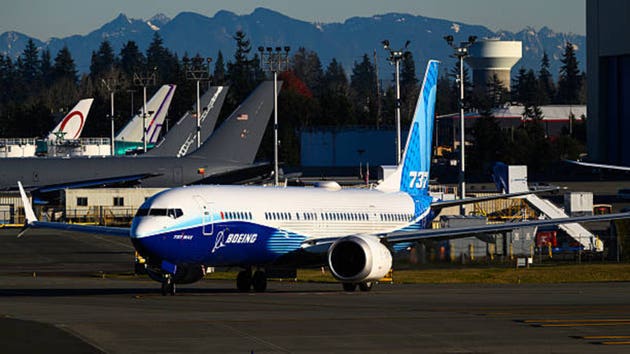
Boeing has reportedly identified a software glitch in its 737 MAX aircraft that could cause the automated navigation system to fail during certain landings. This issue arises when pilots alter their flight paths. The company is working to address this potential problem.

American Airlines (AAL) stock is trending higher, driven by strong Q3 revenue growth expectations and increased premium seating capacity. Despite this positive outlook, the airline faces challenges from high fuel costs and substantial debt, leading to cautious price target adjustments by analysts. The stock's performance reflects a balance between robust demand and macro risks, making it a focus for active traders monitoring both revenue momentum and potential fuel shocks.

Berkshire Hathaway, now run by Greg Abel, has significantly increased its stake in Delta Air Lines while reducing its position in Chevron, a move that contrasts with Warren Buffett's previous aversion to airline investments. This shift comes amidst high jet fuel prices, which have severely impacted the airline industry, yet Berkshire Hathaway appears to be betting on Delta's strategic advantages, such as owning its own refinery, to navigate the challenging market. The article suggests that while fuel costs remain a threat, the futures market anticipates some relief, and Delta is well-positioned among its peers.

US airline trade group Airlines for America has urged the Trump administration to reject increasing China-U.S. flights, citing competitive disadvantages due to limited Russian airspace access for U.S. carriers. This opposition comes as Chinese President Xi Jinping advocates for expanded air links to facilitate travel and trade between the two countries. The current framework allows for approximately 50 weekly round-trip flights, a significant reduction from pre-COVID-19 levels, with U.S. airlines facing extra expenses by rerouting around Russia, unlike some Chinese flights.

Delta Air Lines reintroduced its "Elevate Your Status" program in late 2025, allowing eligible Medallion members to purchase Medallion Qualification Dollars (MQDs) to reach the next elite tier. The program, which directed all proceeds to sustainable aviation fuel initiatives, was criticized for its high 3:1 purchase ratio (costing $3 for every 1 MQD) and strict eligibility requirements, making it largely impractical for many members. While presented as a way to personalize loyalty experiences and fund SAF, commentators viewed it more as a costly top-up mechanism rather than a genuine opportunity to buy status outright, noting that Delta has not disclosed how many members utilized the offer.
Redburn has upgraded Southwest Airlines (LUV) to Neutral from Sell, stating its bearish thesis has "played out" due to valuation reverting to acceptable levels and stronger-than-expected gains from Southwest's product pivot, including reserved seating and ancillary revenue. Despite this upgrade, Redburn maintains Buy ratings on Delta Air Lines (DAL) and United Airlines (UAL), preferring them for their stronger long-term prospects, particularly due to anticipated continued strong leisure and premium demand, capacity restrictions, and their global reach compared to Southwest's domestic focus. Investors are advised to monitor Southwest's ancillary revenue momentum and Delta and United's international capacity and wide-body delivery timelines.
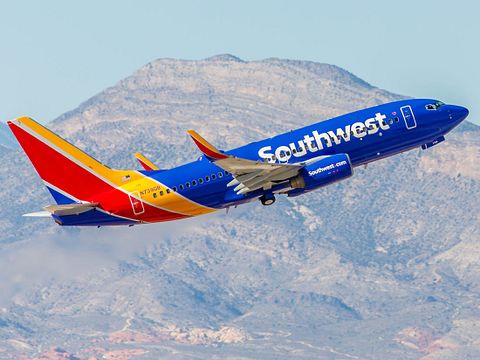
Redburn upgraded Southwest Airlines Co. to Neutral from Sell, stating its bearish thesis had "played out" due to valuation adjustments and stronger-than-expected product pivot gains. Despite this, Redburn maintains Buy ratings on Delta Air Lines Inc. and United Airlines Holdings, Inc., favoring their long-term prospects due to strong leisure/premium demand, capacity restrictions, and their international networks. The firm sees Southwest's product pivot as compelling but views its structural disadvantage in a globally focused framework as a limiting factor compared to its preferred network carriers.

The Netflix documentary "Freefall: A Reckoning for Boeing" by Rory Kennedy exposes critical safety and manufacturing failures at Boeing, building on her previous work. The film highlights accounts from whistleblowers, particularly John Barnett, and connects corporate cost-cutting measures to tragic incidents like the 737 MAX crashes and the Alaska Airlines door plug blowout. It argues that Boeing's problems stem from a corporate culture prioritizing profit over safety, raising concerns about accountability and the current state of commercial aviation safety.