

Mastercard Inc (MA) is an American multinational financial services corporation headquartered in Purchase, New York. The company was first launched in 1966 as Interbank Card Association (ICA) and later re-branded as Mastercard in 1979. It is one of the most renowned global payment solutions companies, connecting consumers, businesses, merchants, banks and governments in more than 210 countries and territories.
Mastercard uses advanced technology and a vast network to provide secure and reliable transactions across the world. The company's payment solutions allow customers to pay the way they want, in-stores, online or via mobile devices. The Mastercard brand is globally recognized due to its logo, which symbolizes trust and reliability.
The company operates a fast, intelligent network, Mastercard's network, processing billions of transactions each year. The network facilitates and directs the exchange of value and information among customers, and guarantees the secure, efficient completion of transactions. The company’s portfolio consists of both credit and debit cards. It also provides related payment products and services, such as prepaid cards, payment gateways and payment processing.
The company's operations are broken into two segments: Mastercard Payment Solutions and Services. Mastercard Payment Solutions involves payment solutions that customers utilize to develop and enhance their existing customer relationships, develop new commerce experiences, and gain a competitive advantage in their business. Services segment focuses on loyalty and reward programs, information services and consulting, and data analytics and cyber security solutions.
Over the years, Mastercard has been at the forefront of innovation – pioneering the standards for mobile payments, digital wallets, and contactless payments. The company has also partnered with several tech giants like Apple, Google and Samsung to incorporate its services into their digital wallets.
Mastercard's vision is "A World Beyond Cash," which means they aim to make digital transactions simple, safe and easily accessible for everyone. In fulfilling this vision, the firm is actively investing and partnering with several FinTech firms to broaden its services and capabilities, enabling it to cater to the evolving needs of its customers.
Today, Mastercard is one of the most valuable companies in the financial sector given its robust payment network infrastructure, innovative spirit and strong brand image. Its shares are traded on the New York Stock Exchange under the ticker symbol "MA". It's noteworthy that the company has delivered consistent financial performance with solid revenue and profit growth, further boosting investor confidence in its business model and strategic initiatives.
Income statement
Balance sheet statement
Cash flow statement
Current assets / Current liabilities
Equity / Debt / Cash
Dividends
Apple is preparing to launch Apple Pay in India next month, starting with Axis Bank credit cards, after the Reserve Bank of India changed regulations to allow biometric authentication for card payments. While this removes a significant obstacle, Apple Pay will initially only support Visa and Mastercard credit cards and not India's dominant Unified Payments Interface (UPI) system, which accounts for 84% of digital payments. This strategy allows Apple to enter the market gradually, but its growth potential without UPI integration and broader bank partnerships may be limited, making it primarily an ecosystem-retention initiative rather than a major near-term revenue catalyst.

Cardano (ADA) experienced an 8.54% price surge due to its inclusion in Mastercard's crypto partner program and Fireblocks' expanded support for Cardano native assets. These institutional integrations, along with ongoing ecosystem improvements and a favorable altcoin market, have bolstered ADA's legitimacy and accessibility. The developments suggest potential for continued price growth as traders anticipate further extension of the breakout.
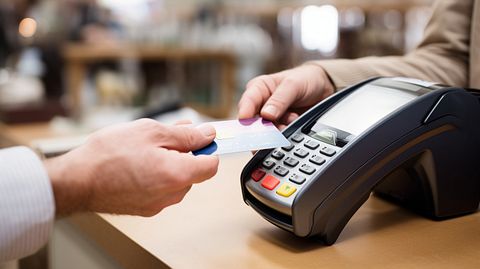
This article compares Visa (V) and American Express (AXP) as investment opportunities, highlighting their different business models. While Visa is presented as a safer business with high margins and no credit risk, American Express, despite taking on credit risk, offers faster earnings growth, a larger dividend, and a lower valuation, making it potentially a better buy for investors willing to accept the associated risk.

Shopify has partnered with Meta to integrate its AI agent Muse for shoppable stores, embracing agentic commerce and seeing a stock jump. In contrast, Amazon is blocking Muse and other third-party AI shopping tools, aiming to protect its advertising revenue and proprietary shopping experience. This highlights two diverging strategies toward the growing trend of AI in e-commerce, with Amazon preferring its own AI assistants like Alexa for Shopping and Rufus.

Analysts have provided insights on several financial companies, with Citi maintaining a Hold rating on PNC Financial (PNC) with a $290.00 price target. Wells Fargo issued a Buy rating for Mastercard (MA) with a price target of $668.00 and a Hold rating for OneMain Holdings (OMF) with a $65.00 price target. The reports include analyst consensus ratings and potential upsides for each stock.
Despite significant business expansion, including building a bank, launching a card program, and introducing a stablecoin, SoFi Technologies' stock has struggled to gain ground, sitting 37.8% lower year to date. The article attributes this to substantial share dilution since 2021 and a valuation reset in the fintech market. The company's cross-buy rate, where existing members adopt more products, shows strong operational progress, but per-share economics need to outpace the growing share count for the stock to rise materially.
Envestnet Asset Management Inc. reduced its stake in Citigroup Inc. by 3.5% in the second quarter, selling 100,483 shares but still holding 2.8 million shares valued at $391.4 million. Despite this reduction, institutional investors collectively own a significant 71.72% of Citigroup. The article highlights general positive sentiment from Wall Street analysts, strong quarterly earnings, and a dividend increase, though it also notes concerns about rising credit card delinquencies and inflation.

NMI has expanded its Business Capital program, offering new term loans for merchants through ISOs and software companies. Other news includes a report that 15% of U.S. consumer transactions are expected to be handled by AI agents, global payments revenue growth is projected to slow to 5% through 2030, and Moov Financial has launched a new peer-to-peer payment service. Additionally, PayJunction found that credit card surcharges wouldn't affect customer relationships at auto dealerships, Citi launched Citi Commerce Media to help advertisers reach cardholders, and J.P. Morgan Payments is partnering with Thunes to expand cross-border payment capabilities.
Atlanticus Holdings (ATLC) sold its Auto Finance segment (CAR) for approximately $71.2 million, consisting of cash and a seller note. The company plans to use the proceeds to reduce debt and invest in higher-growth product lines. The success of this divestiture in replacing lost earnings will depend on the returns generated by the reinvested capital relative to the profit surrendered from the sold unit, as well as the benefits from debt reduction.