

ArcelorMittal SA ADR (MT) is a globally recognized, multinational steel and mining company. With its headquarters in Luxembourg, ArcelorMittal is widely hailed as the world's leading steel manufacturer, holding significant influence and operational presence across more than 60 countries worldwide.
Founded in 2006 from the merger of Arcelor SA and Mittal Steel, the steel giant has since been at the forefront of steel production, coming at a critical juncture when the steel industry was facing immense challenges on the globalization front. It boasts an annual achievable production capacity of approximately 113 million tons of steel, a testament to its undisputed leadership in the global steel landscape, synonymous with quality and innovation.
By producing a broad range of high-quality finished and semi-finished steel products, ArcelorMittal’s market capture is expansive, cutting across key sectors such as automotive, construction, household appliances, packaging, and general industries. The company's portfolio is defined by flat products, long products, tubular products, and more.
ArcelorMittal also stands out for its pioneering and sustainable approach to business. Devoted to reducing its environmental footprint, ArcelorMittal is at the helm of leading research into clean steel-making technologies. The company has set ambitious targets to cut carbon emissions to net-zero by 2050, reinforcing its commitment to environmental sustainability.
Moreover, ArcelorMittal is committed to the economic and social well-being of its comprehensive workforce, embracing diversity and inclusion in its corporate culture. The company believes in maintaining a healthy, safe, and productive working environment for its employees.
Fiscal management at ArcelorMittal has demonstrated a capacity to navigate tough market conditions. The company's resilient financial performance is testament to its leadership's strategic agility, focused on maintaining financial flexibility, managing risks effectively, and driving operational efficiency.
Traded under the MT symbol, ArcelorMittal SA ADR is a component of both the Stoxx Europe 600 and FTSEurofirst 300 indices. The company's American Depositary Receipts (ADRs) allows U.S. investors to invest in ArcelorMittal without going through the hassle of buying the company’s shares on foreign stock exchanges. Each ADR represents one ordinary share of ArcelorMittal and it provides investors with a convenient way to gain economic exposure, with the same limited liability as holding ordinary shares.
ArcelorMittal SA ADR, therefore, presents an opportunity for selective investors to be part of a global industrial leader, whose growth is deeply intertwined with global infrastructural development, all while mirroring a commitment to societal responsibilities.
Income statement
Balance sheet statement
Cash flow statement
Current assets / Current liabilities
Equity / Debt / Cash
Dividends

ArcelorMittal has announced it cannot safely restart operations at its Ukrainian plant in Kryvyi Rih following recent missile attacks that resulted in five deaths, 17 injuries, and significant damage to production facilities. The steelmaker expects to record a $1 billion impairment due to the impact of four missile strikes over the past five weeks. ArcelorMittal had been operating at reduced capacity since 2022.
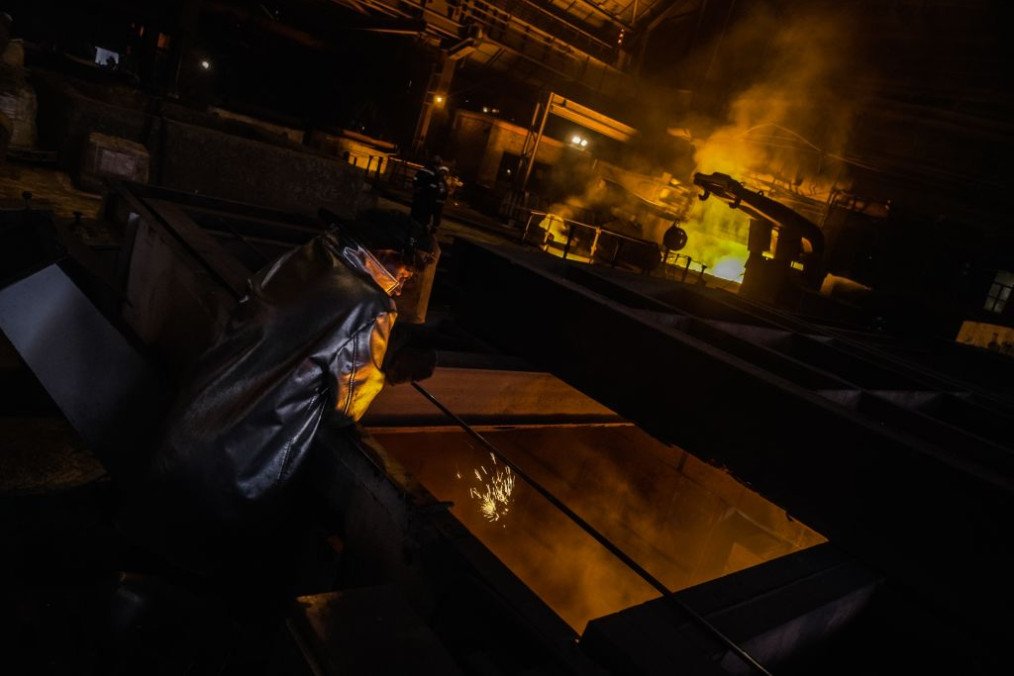
Global steel giant ArcelorMittal has indefinitely suspended operations at its Ukrainian subsidiary, ArcelorMittal Kryvyi Rih, due to ongoing deadly Russian bombardments. The company reported a $1 billion non-cash impairment charge and stated that four missile strikes in five weeks caused extensive damage, five deaths, and 17 injuries. ArcelorMittal has provided over $700 million to the plant since the full-scale invasion and is now discussing the facility's future with the Ukrainian government.

ArcelorMittal has informed the Ukrainian government that it cannot safely resume steel operations in the country due to recent missile strikes. The company anticipates an impairment charge of approximately $1 billion against its Ukrainian subsidiary, ArcelorMittal Kryvyi Rih, following four attacks in five weeks that resulted in casualties and significant damage.

ArcelorMittal expects to book a non-cash impairment charge of approximately $1 billion due to the inability to safely restart operations at its ArcelorMittal Kryvyi Rih subsidiary in Ukraine following repeated Russian missile strikes. The company has provided over $700 million in financial support to the unit and will now focus on preserving infrastructure and discussing future options with the Ukrainian government. J.P. Morgan analysts suggest this impairment is not expected to significantly affect group EBITDA, but supply disruptions could tighten European hot-rolled coil steel supply and support prices.

ArcelorMittal announced it will halt operations at its Kryvyi Rih plant in Ukraine due to multiple missile strikes, leading to a non-cash impairment charge of approximately $1 billion. The strikes resulted in employee deaths and injuries, making safe operations impossible under current conditions. The company is in discussions with the Ukrainian government about the plant's future and aims to preserve its infrastructure for a potential future restart.

The war in Ukraine has accelerated gender transformation in the steel industry, particularly at ArcelorMittal Kryvyi Rih, where women are increasingly taking on roles traditionally held by men due to staff shortages. The company has launched various initiatives, including vocational training programs and the "Power of Women" community, to support and develop its female employees. These efforts demonstrate a strategic shift towards diversity and inclusion, integrating women's leadership and development into the company's core operations amidst wartime challenges.
ArcelorMittal's Kryvyi Rih complex in Ukraine was hit by a missile, resulting in deaths, injuries, and halted steel production, yet the company's share price has shown strong returns. Despite this operational risk, ArcelorMittal is considered undervalued by some analysts and intrinsic estimates, with a fair value of €66.61 against its current €63.82. However, its P/E ratio is significantly higher than the industry average, suggesting a degree of market optimism that investors need to weigh against ongoing risks like trade barriers and green transition spending.