

Virgin Galactic Holdings, Inc., publicly traded as SPCE, is an American space tourism company, venturing into groundbreaking strides within the commercial spaceflight industry. It was initially founded in 2004 by renowned entrepreneur Richard Branson as part of his Virgin Group, with a vision to make space tourism a viable possibility for the general public. Laying down the framework for the company, Branson set his sights on providing routine suborbital spaceflights to space tourists and suborbital launches for space science missions.
Since its inception, it changed hands becoming part of Social Capital and ultimately getting listed on the New York Stock Exchange in October 2019, thus becoming the first human spaceflight company to be publicly traded.
Headquartered in Spaceport America, New Mexico, Virgin Galactic operates with dual goals of advancing space tourism and contributing to scientific research. As of 2021, their primary vehicle, the SpaceShipTwo, has completed multiple test flights, with Richard Branson himself joining the first fully crewed spaceflight in July 2021.
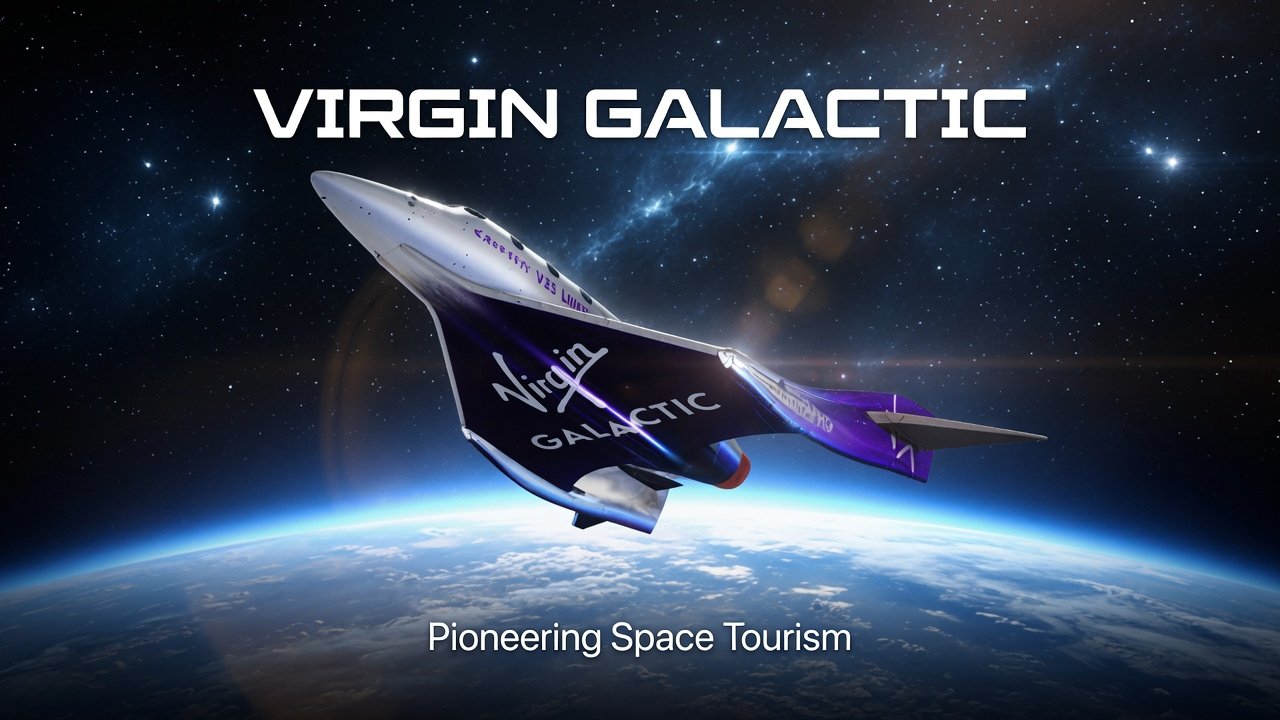
The SpaceShipTwo has a unique air-launched system that combines a custom high-altitude jet known as White Knight Two, which carries the spaceship to the launch altitude. After this point, the spaceship is released and rapidly ascends to space through its rocket engine.
Wall Street views the business model of this cutting-edge company as pure speculation, given the lack of historical precedents. However, with back-to-back successful flights, the credibility and potential profitability of commercial suborbital tourism seem increasingly probable. The company has already taken deposits for tickets from about 600 customers, at a price point of $250,000. As the company further refines its operations, it hopes to increase the frequency of its flights and eventually decrease the cost per seat, turning space tourism into a more accessible reality.
Despite teething problems and delays, Virgin Galactic has made significant progress in space commerce. The company continues to push boundaries, even opening up opportunities for microgravity research and professional astronaut training. With its growing achievements, Virgin Galactic aims to inspire a new generation of dreamers and explorers, bringing to life a world where people can travel and experience the cosmos first-hand.
Virgin Galactic Holdings, Inc represents an exciting proposition for investors interested in gaining exposure to the still-nascent and highly promising space economy. It is the embodiment of private investment and innovation, revolutionizing space travel for humans at a scale never previously imagined.
Income statement
Balance sheet statement
Cash flow statement
Current assets / Current liabilities
Equity / Debt / Cash
Dividends
Virgin Galactic Holdings Inc. (SPCE) shares fell 2.00% on Friday, closing at $2.94, despite a generally grim trading session for the broader market. The stock significantly underperformed its competitors, with the NASDAQ Composite Index falling 0.52% and the Dow Jones Industrial Average falling 0.02%. Virgin Galactic's closing price was 66.97% below its 52-week high achieved on June 1st.

Virgin Galactic has extended the deadline for the public to vote on the name of its next-generation spaceplane, offering four choices: Horizon, Explorer, Ascend, and Apeiron. The company is building two "Delta-class" vehicles, with the first scheduled for flight testing and the second's name to be chosen by public vote. Despite a delay in commercial service to February 2027, Virgin Galactic anticipates high demand and aims for a significant increase in flight frequency and profitability with the new fleet.
Shares of Virgin Galactic Holdings Inc. (SPCE) fell by 2.69% on Wednesday, closing at $2.89. This underperformance occurred during a generally challenging trading session for the stock market, with both the NASDAQ Composite Index and Dow Jones Industrial Average also declining. This marks the third consecutive day of losses for Virgin Galactic stock.

Virgin Galactic Holdings (SPCE) stock rose by 11.8% due to renewed optimism regarding commercial spaceflight milestones and a clearer timeline for its Delta-class operations. The company anticipates glide tests for its new ships in Q3 2026 and commercial flights in Q4 2026, supported by VSS Unity's resumed glide flights for crew training and a debt-for-equity swap. Despite narrowing losses and pre-booked customers, SPCE remains a high-risk "story stock" burdened by significant cash burn, quarterly losses, and dilution from the recent equity swap.

Virgin Galactic stock (SPCE) rose by 7.61% following optimistic news regarding future commercial flights. The company's VSS Unity has resumed glide flights, training crews for the upcoming Delta-class spaceship tests and a target commercial launch in Q4 2026. This progress, alongside a debt-for-equity swap and hundreds of pre-booked customers, provides a clearer roadmap for traders despite the company's current cash-burning phase.
Virgin Galactic (SPCE) shares plummeted 31.76% after the SpaceX IPO, largely due to its weak fundamentals and being a "proxy trade" for SpaceX. The company reported minimal revenue and a significant net loss in Q1 2026, with only 2.5 quarters of cash runway. Its future hinges on the successful execution of its Delta-class program, with crucial glide tests in Q3 2026 and commercial flights in Q4 2026 to convert pre-booked demand into revenue and avoid further dilutive capital raises.

Space stocks rallied significantly ahead of SpaceX's historic Nasdaq debut, with companies like Momentus Inc., Virgin Galactic Holdings, and Intuitive Machines experiencing substantial gains. SpaceX is set to price its IPO at $135 per share, targeting a $75 billion raise and a $1.78 trillion valuation, which would make it the largest IPO in stock market history. Investors are flocking to other space-related companies as a proxy for SpaceX, driving up their stock prices.