

Stratasys Ltd. (SSYS) is a leading global player in the field of additive manufacturing, more commonly known as 3D printing. Listed on the NASDAQ and headquartered in Eden Prairie, Minnesota, USA and Rehovot, Israel, Stratasys has pioneered significant advancements in 3D printing technology since its inception in 1989.
Stratasys specializes in the production of both 3D printers and materials that can create items with varying levels of detail, from basic prototypes to finished goods. The company deploys Fused Deposition Modelling (FDM) and PolyJet photopolymer technologies, both proprietary technologies used to manufacture thermoplastic and photopolymer components, respectively. Stratasys has developed a reputation for providing top-quality 3D printing systems, materials, and services worldwide, serving industries such as aerospace, automotive, healthcare, consumer products and education.
The company differentiates itself through its wide range of products and services designed to meet diverse needs. Furthermore, Stratasys is the parent company of MakerBot, a popular and innovative 3D printing brand known for making the technology accessible to a broader audience, especially in the education and professional sectors.
Stratasys' broad portfolio of 3D printing technology aims to make it easier to design, iteratively prototype, and produce end-use parts directly from 3D CAD data. This allows Stratasys' customers to rapidly accelerate innovation, speed up product development, improve manufacturing efficiency and reduce production costs, all while maintaining a high degree of design integrity.
Stratasys places great importance on research and development, striving for continuous innovation in each of their products and solutions. Stratasys' dedication to technological progress dovetails with its ongoing commitment to cultivate a sense of community within the world of 3D printing, partnering with various educational institutions to promote STEM education (Science, Technology, Engineering, and Mathematics) and leveraging the technology within classrooms and research labs.
To navigate the competitive 3D printing landscape, Stratasys continues to innovate and expand its services, introducing advanced software, materials, and printers that not only meet emerging customer needs but also push the boundaries of what's possible with additive manufacturing.
Stratasys Ltd., with its rich history, robust technology portfolio, and commitment to innovation, continues to play a vital role in defining and shaping the future of additive manufacturing technology, bringing 3D printing transformation to various industries around the world.
Income statement
Balance sheet statement
Cash flow statement
Current assets / Current liabilities
Equity / Debt / Cash
Dividends
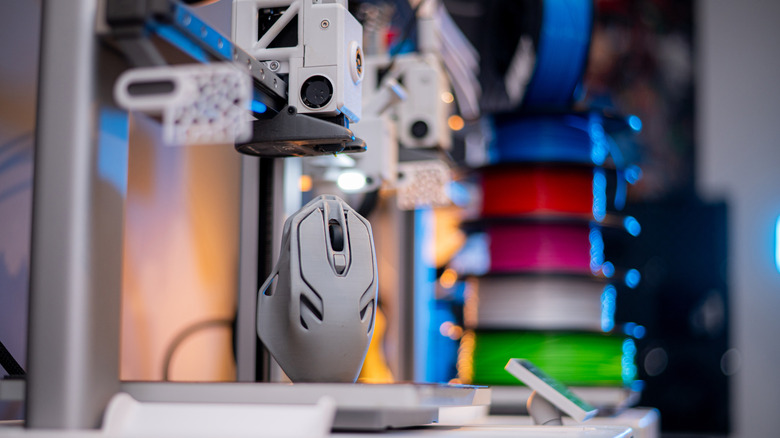
Bambu Lab, a major 3D printer company, has been ordered to pay Stratasys, Ltd. over $27 million in damages for patent infringement in a Texas lawsuit. The lawsuit concerned technologies like automatic bed leveling and purge towers, primarily affecting Bambu Lab's first-generation products. Despite a similar suit in Europe ruling in Bambu Lab's favor, the company plans to appeal the U.S. verdict, though existing printers are not expected to be affected, and newer models use different technology.

A federal judgment ordered Bambu Lab companies to pay Stratasys $27.6 million for patent infringement, an amount equivalent to 20.1% of Stratasys's latest quarterly revenue. While the award is material, investors did not treat it as a significant windfall, and Bambu Lab plans to challenge the verdict through post-trial review and an appeal. The ruling only covers past U.S. sales, and Stratasys still faces GAAP losses despite a strong balance sheet.

A U.S. federal jury in Marshall, Texas, awarded Stratasys $27.6 million in damages after finding that Bambu Lab willfully infringed four of its 3D printing patents related to force detection, purge towers, and extrusion-based deposition. This verdict concludes the first of two patent infringement cases filed by Stratasys against Bambu Lab, with a second case and an additional claim still pending trial. Despite the ruling, no injunction has been issued, and Bambu Lab's printers remain available for sale.
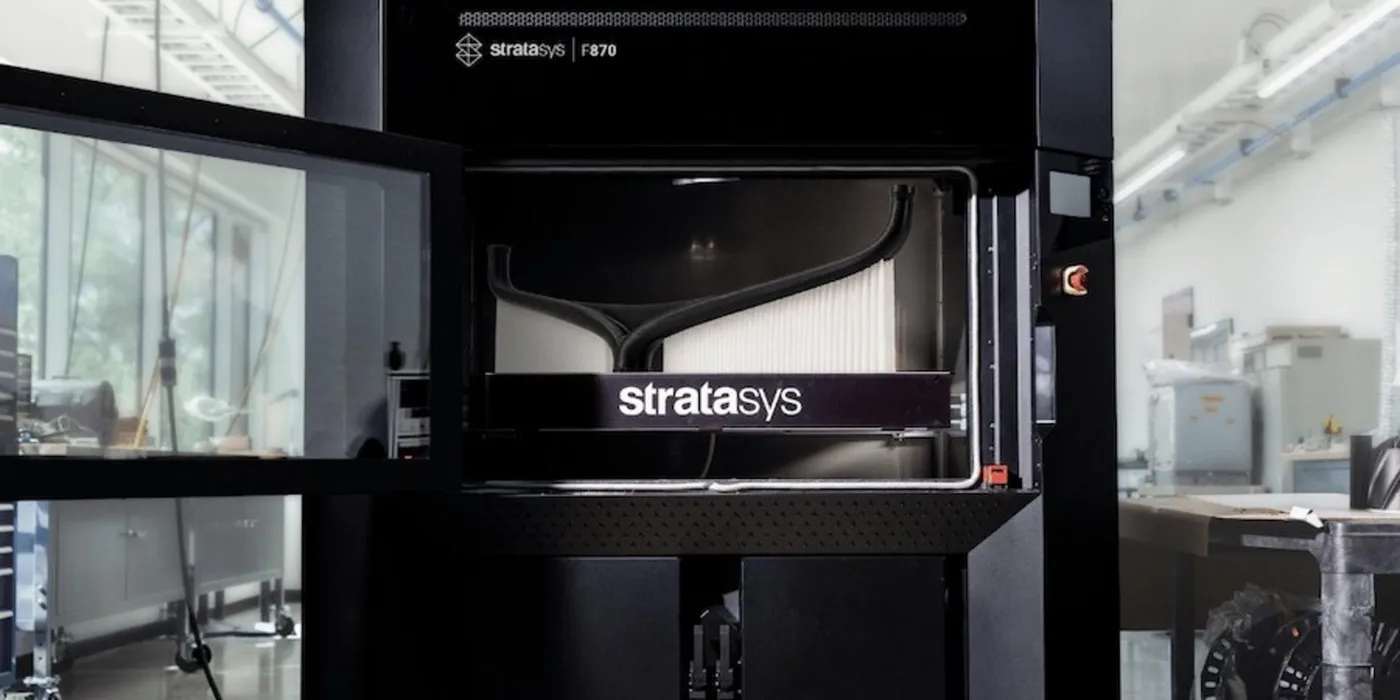
Stratasys has launched the new F870 fused deposition modeling (FDM) system, a large-format additive manufacturing platform designed for industrial production, particularly in the automotive and aerospace sectors. The system offers a substantial build volume and uses industrial-grade materials like Nylon 12CF, aiming to reduce costs and accelerate production for tooling, fixtures, and end-use parts. Toyota and Rivian are already evaluating the F870 for their manufacturing operations.

Stratasys has introduced the F870 FDM system, a large-format additive manufacturing platform designed for industrial, automotive, aerospace, and defense applications. This system features a build volume of 1,000 × 610 × 610 mm and supports industrial-grade materials like Nylon 12CF, ASA, ABS, and FDM ABS Draft. The F870 aims to help manufacturers produce tooling, fixtures, manufacturing aids, and end-use parts, with companies like Toyota and Rivian already evaluating its capabilities.
Stratasys (NASDAQ:SSYS) shares fell 8.8% to $7.84 during Thursday's trading, with volume significantly higher than average. The stock is currently trading below its 50-day and 200-day moving averages, despite a "Moderate Buy" consensus rating and a target price of $12.33 from analysts. The company reported $137.61 million in quarterly revenue and $0.03 EPS but continues to show a negative net margin.