
THOR Industries, Inc. (THO) is the world's largest manufacturer of recreational vehicles (RVs). The company's history spans over four decades and hosts an extensive portfolio of some of the world's most recognized and admired RV brands. THOR was founded on August 29, 1980, by Wade F. B. Thompson and Peter Busch Orthwein, and is headquartered in Elkhart, Indiana, United States.
Renowned for its comprehensive and diverse range of RVs, THO's product line includes everything from affordable towable trailers to luxury motorhomes. Its primary operating subsidiaries include Airstream, Heartland RV, Jayco, and Keystone RV Company, among others. Through these units, THO offers a range of services, including sales, service, and financing to dealers and consumers.
THOR Industries, Inc. operates through three segments: North American Towable Recreational Vehicles, North American Motorized Recreational Vehicles, and European Recreational Vehicles. The company is committed to continuous quality improvement, a philosophy that values their customers' input and draws upon their collective experience to enhance RV ownership and enrich the passion for the outdoors with innovative features, durable construction, and service professionals worldwide.
One of its leading brands, Airstream, absolutely personifies the American spirit of freedom and adventure. Airstream’s distinct, rounded-aluminum, silver-bullet shape is instantly recognizable and admired for its design as well as the craftmanship and luxuries it provides to the modern traveler.
The company changed the RV industry by being the first to provide its customers with the ability to custom design the floor plan of their new RV. This level of customization reflects THOR's commitment to meeting the ever-changing tastes and needs of its diverse customer base.
THOR Industries, Inc. takes its corporate social responsibility (CSR) seriously, where it demonstrates environmental stewardship by creating fuel-efficient products, promoting recycling in its facilities, and using more environmentally friendly materials in its products. The company also encourages and supports volunteerism and philanthropy among its employees and has made significant contributions toward initiatives for the betterment of the communities where it operates.
Driven by an innovative spirit and commitment to providing the highest quality products and services, THOR continues to grow, maintaining its rank as a leader in the RV industry. From an investment perspective, THO is listed on the New York Stock Exchange and has been recognized for delivering solid revenue growth and shareholder returns. The company's proven performance and ongoing investments in new technology and production capacities remain key to its long-term business sustainability and success.
Income statement
Balance sheet statement
Cash flow statement
Current assets / Current liabilities
Equity / Debt / Cash
Dividends
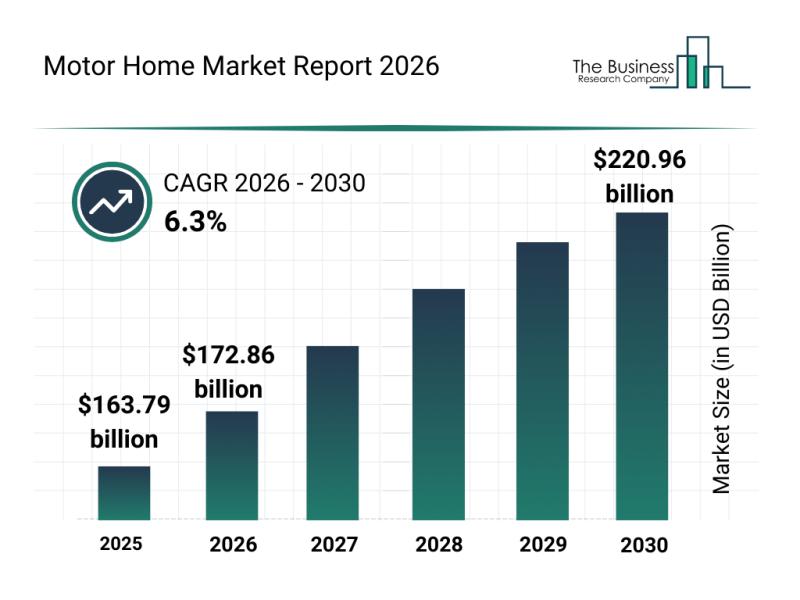
The motor home market is projected for significant expansion, growing from $163.79 billion in 2025 to $220.96 billion by 2030, driven by changing travel habits, rising disposable incomes, and the popularity of mobile living. Key trends include a focus on luxury recreational travel, compact motor homes, and the integration of smart interior technologies and electrification. Leading companies like Thor Industries Inc. and Grounded are innovating with hybrid and fully electric modular designs to enhance sustainability and user experience.

THOR Industries (THO) has seen a sharp 18.5% rebound over the past month, despite being down significantly year-to-date and over the last year. The stock is currently trading at a P/E ratio of 22.5x, which is considered overvalued compared to its industry peers and its estimated fair P/E of 16.8x. Furthermore, a discounted cash flow (DCF) model suggests the stock price of $77.29 is expensive, trading well above an estimated future cash flow value of $29.42, indicating that investors may be embedding too much optimism into the current price.
Wells Fargo has reinstated coverage on Thor Industries Inc. (NYSE: THO) with an Equal Weight rating and an $80.00 price target. The analyst noted that despite being an industry leader, Thor Industries is struggling with poor demand, a multi-year share loss, and limited growth from mergers and acquisitions. While future earnings estimates are achievable, a cycle acceleration is crucial for stock improvement.

THOR Industries has announced its 2026 Annual Meeting will be held virtually on December 16, 2026, and released its Fiscal Year 2026 financial results. The company reported a net income of $177.5 million, operating cash flow of $321.2 million, and raised its annual dividend by 4% to $2.08 per share despite a challenging RV industry downturn. Shareholders will vote on director nominees, the independent registered public accounting firm, and executive compensation at the meeting.
Thor Industries reported consolidated net sales of $9.61 billion and a net income of $177.5 million for the fiscal year ending July 31, 2026. The company returned $223.9 million to shareholders through repurchases and dividends, while also reducing debt by $59.7 million. Thor Industries also initiated a strategic transformation of its North American RV operations during this fiscal year.
THOR Industries (THO) saw its stock price climb 7.1% to $79.11, participating in a broader sector rally that included recreational vehicle and electric vehicle manufacturers. This coordinated upward movement among several peers suggests a shift in investor sentiment toward consumer discretionary spending and vehicle manufacturing, rather than company-specific news. Investors are advised to monitor if this sector-wide strength persists, watching for institutional repositioning or fundamental shifts in consumer demand.

THOR Industries (THO) stock surged 7.1% to $79.11, participating in a broad sector-wide rally across the recreational vehicle and electric vehicle manufacturing industries. The gains, seen across multiple peers like SEV and RIVN, suggest a renewed investor appetite for the sector, possibly driven by improving macroeconomic expectations or institutional rotation. Investors are advised to monitor whether this strength persists and if it's supported by fundamental shifts in consumer demand.