

Interface Inc. (ticker symbol: TILE) is a leading commercial flooring company that specializes in manufacturing carpet tiles, modular resilient flooring, and luxury vinyl tile. The core of the company's business revolves around innovative products, top-notch production quality, and sustainability.
Founded in 1973, by Ray Anderson, Interface Inc. is based in Atlanta, Georgia. The company has grown over the decades and expanded its operations considerably; today it operates manufacturing facilities in the U.S., Australia, the Netherlands, the U.K., Thailand, and China.
The company's pioneering portfolio of modular carpet products forms the bulk of its business. Interface's carpet tiles are renowned in the industry for their design flexibility, durability, and aesthetic appeal, catering to clients from a wide range of sectors including corporate, education, healthcare, hospitality, and retail.
Interface Inc. is also recognized as an environmental leader in the industry. The company was one of the first in its sector to show commitment to sustainability. In 1994, under the visionary leadership of founder Anderson, Interface embarked on an ambitious campaign called "Mission Zero" which dedicated the company to eliminate any negative impact it may be having on the environment by the year 2020. Strategies implemented under this mission have included reducing waste during production, recycling and repurposing used products, and researching new, more sustainable materials.
Post-2020, the company has launched a new mission called "Climate Take Back," aiming to become a carbon negative company by 2040. The initiative’s main strategies involve driving new innovations in materials and processes that can store carbon, and shifting to renewable energy sources for manufacturing.
Interface's commitment to sustainability has not only contributed significantly to its brand image, but also to its financial performance. Their business strategy, centered on sustainable practices and innovative products, has allowed the company to maintain a strong stand in the flooring market, making it an attractive prospect for investors.
Interface is also committed to quality in its operations and customer relations. The company employs an extensive network of consultants and installers and provides detailed online resources to ensure that customers receive the best possible service and outcomes.
Despite economic ups and downs, Interface Inc. (TILE) has shown resilience and adaptability, ensuring its place as a top competitor in the commercial flooring industry.
Income statement
Balance sheet statement
Cash flow statement
Current assets / Current liabilities
Equity / Debt / Cash
Dividends

Interface, Inc. (NASDAQ:TILE) reported strong profit numbers, but an analysis suggests that these were boosted by US$18m in unusual items, which may not be repeatable. This led to investor disappointment despite the healthy earnings. While the company has shown impressive EPS growth over the last three years, its underlying earnings power might be weaker than its reported statutory profits.
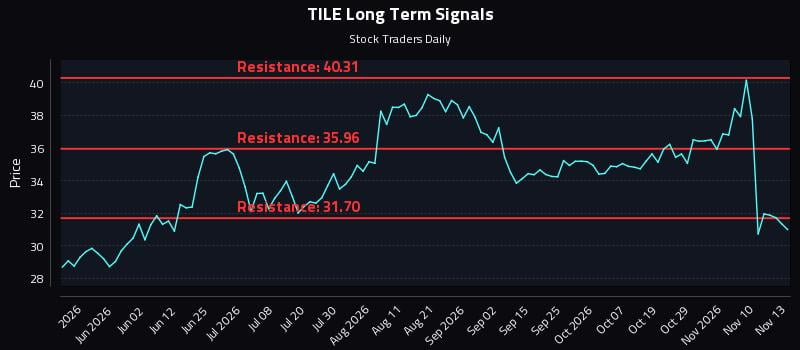
This report from Stock Traders Daily analyzes Interface Inc. (TILE) using AI models to determine its effect on rotational strategy timing. It identifies weak near and mid-term sentiment, posing a challenge to a positive long-term outlook, with elevated downside risk. The analysis provides specific trading plans (Position, Momentum Breakout, and Risk Hedging) with entry, target, and stop levels based on multi-timeframe signal analysis.

Interface, Inc. (NASDAQ:TILE) has announced it will present at the Southwest IDEAS Investor Conference on November 19, 2026. The presentation will be webcast live at 9:15 a.m. Central Time, with a replay available for at least 90 days. This information was disclosed in a Form 8-K filing on November 12, 2026, signed by Vice President David B. Foshee.

Interface (NASDAQ:TILE) reported third-quarter 2026 net sales of $366.7 million, a 0.6% increase year over year, with adjusted diluted EPS rising 11.5% to $0.68. The company reaffirmed its full-year earnings guidance, attributing this to its diversified product portfolio, improved operating efficiency, and consistent demand across key market segments like Healthcare, Education, and Corporate Office. Despite softer conditions in EMEA, global billings saw an increase, and management cited a strong backlog and cost discipline as contributing factors to maintaining their outlook.