
T-Mobile US, Inc. (TMUS) is the third-largest wireless carrier in the United States, with a customer base of approximately 102.1 million users as of April 2021. The prominent telecommunications company offers wireless voice, messaging, and data services under the T-Mobile and Metro by T-Mobile brands.
T-Mobile US, Inc. came into existence through the merger of T-Mobile USA and MetroPCS Communications in 2013. The company started operations under the complete ownership of the German telecommunications company Deutsche Telekom, which stemmed from a failed sale of the corporation to AT&T in 2011 due to regulatory complexities. In 2020, a key milestone was achieved in T-Mobile's history when it successfully merged with Sprint Corporation, securing the position of the brand as one of the dominant forces in the telecommunications industry.
Headquartered in Bellevue, Washington, T-Mobile prides itself on being a disruptive force in the telecommunications industry. The firm coined the term "Un-carrier" to highlight its initiatives aimed at revolutionizing wireless services, intended to deliver superior consumer experiences. These initiatives revolve around eliminating traditional pain points for customers such as long-term contracts and data limits.
Apart from the consumer services, T-Mobile US, Inc. offers multiple products in the business sector. These include IoT (Internet of Things) solutions, security and identity management solutions, and a suite of communication services tailored to meet the unique needs of businesses of all sizes.
T-Mobile's edge over its competitors lies in its dedication towards aggressively expanding and upgrading its network. In fact, in the latter part of 2020, the company became the first to launch a nationwide standalone 5G network, elevating it to the forefront of the 5G revolution. The company continues its pursuit of providing faster, more reliable service to its customers nationwide, dedicating significant capital to build out and enhance its network performance.
Despite stiff competition from its rivals AT&T and Verizon, T-Mobile has made significant strides in both its subscriber growth and network performance, boasting a credible reputation built on customer satisfaction, innovation, and service quality.
A relentless commitment to push industry boundaries has made T-Mobile US, Inc. a formidable player in the telecommunications industry. The company, with its signature magenta branding, has not only changed the face of wireless communication but continues to drive change and innovation, keeping the needs of its customers at the forefront.
Income statement
Balance sheet statement
Cash flow statement
Current assets / Current liabilities
Equity / Debt / Cash
Dividends
The Goldman Sachs Group has lowered its price target for T-Mobile US (NASDAQ:TMUS) from $230 to $211, while maintaining a "Buy" rating, projecting a potential upside of 27.55% from its previous close. Despite this reduction and other recent target cuts from various firms, the consensus analyst rating remains a "Moderate Buy" with an average price target of $249.48. T-Mobile recently surpassed earnings expectations, reporting $2.99 EPS against a $2.59 consensus, and saw a 7.9% year-over-year revenue increase to $22.79 billion.
QRG Capital Management Inc. reduced its stake in T-Mobile US, Inc. by 41.6% in the second quarter, selling 13,665 shares and retaining 19,176 shares valued at $3.2 million. This comes as T-Mobile reported strong quarterly adjusted earnings of $2.99 per share, exceeding estimates, and increased its quarterly dividend by 15% to $1.17 per share. Despite some analyst price target adjustments and competitive pressures, the company maintains a consensus "Moderate Buy" rating from analysts, with positive sentiment around its dividend increase and AI-powered network capabilities.

Joby Aviation insiders, including the CEO, CFO, and a director, sold shares under pre-arranged Rule 10b5-1 trading plans between August and September as the stock declined. This selling activity coincided with Joby's cash burn widening from $118.7 million in mid-2025 to approximately $200 million in each of the last two quarters. While the company still holds significant cash reserves and a pending Toyota investment, its widening cash burn rate during a critical operational period is highlighted as the more significant concern for investors.

Honda and Acura are reportedly developing new, larger three-row SUVs, with internal project names "Pilot XXL" and "Acura XL," to compete with models like the Toyota Grand Highlander and Lexus TX. These vehicles, along with the next-generation Acura MDX, could be produced at a proposed new factory in Ohio, expanding Honda's North American manufacturing capacity. While Honda calls the reports speculative, these larger SUVs would offer more interior space, potentially appealing to families seeking additional luggage room.

Verizon Communications is expanding its wireless portfolio with new Motorola device offers, including promotional pricing and flexible upgrade options, aiming to attract and retain customers. These initiatives involve significant discounts on select Motorola smartphones, loyalty rewards, and AI benefits like Google AI Pro. The company faces strong competition from AT&T and T-Mobile, which are also offering similar device promotions and customer incentives.
T-Mobile US, Inc. (NASDAQ:TMUS) has announced a quarterly dividend of $1.17 per share, payable on December 10th to shareholders of record on November 25th. This represents a 14.7% increase from the previous dividend and an annualized yield of approximately 2.8%. The dividend is well-covered by earnings, with a current payout ratio of 35.9%, and the company recently beat earnings expectations with EPS of $2.99 and revenue up 7.9% year-over-year.
Verizon's stock performance, which shows a 22% year-to-date return, appears to be based on an anticipated recovery rather than current financial metrics. Despite leading its peer group in stock returns, Verizon lags in revenue growth and operating margin compared to some rivals like AT&T, which has a lower P/E ratio. The article questions whether Verizon's recent customer gains and revenue forecast increases are sufficient to justify its higher valuation, especially given its declining operating margin and earnings per share over the past three years.
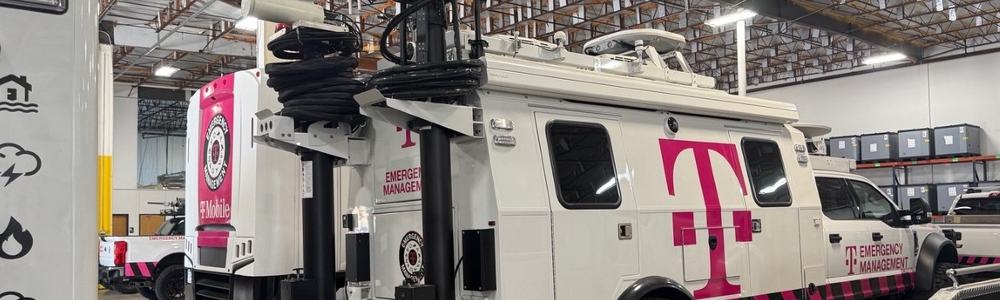
T-Mobile US has enhanced its self-organizing network (SON) service by integrating a new intent-based AI automation layer called AutoPilot, which can make real-time network adjustments in about half the usual time. The company is also rolling out its Dynamic CX solution nationwide, aiming to proactively manage network demand by predicting surges and adjusting resources automatically. These AI-driven advancements, along with the SON's operational figures, demonstrate T-Mobile's focus on building a more resilient and adaptive 5G network.

This article compares AT&T and Verizon Communications as potential investments for 2026, focusing on their financial performance, strategies, and risk profiles. While both telecom giants offer high dividend yields attractive to income-oriented investors, AT&T is highlighted as potentially more appealing due to its lower payout ratio, which provides more financial flexibility. The analysis delves into each company's revenue, net income, debt-to-equity ratio, and free cash flow, along with competitive pressures and recent strategic moves.
Moffett Nathanson raised its price target for T-Mobile US (NASDAQ:TMUS) to $246 from $242, maintaining a "buy" rating and suggesting a 48.5% upside. Despite some recent price target reductions from other firms, analyst sentiment for T-Mobile remains a "Moderate Buy" with a consensus price target of $251.16. The company recently reported strong quarterly earnings per share of $2.99, exceeding estimates, though revenue of $22.79 billion slightly missed expectations.