

United Airlines Holdings, Inc. (UAL), formerly known as United Continental Holdings, Inc., is a major American airline corporation with its headquarters situated in Willis Tower in Chicago. United’s journey began in 1926 with a single Swallow aircraft. Now, the company stands as the world's third-largest airline when measured by revenue and fleet size.
UAL, boasting a fleet of more than 790 aircraft, is best known for its vast global route network. These commercial aircraft fly to more than 300 destinations, spanning five continents worldwide. United has a robust presence in the Asia-Pacific region, which makes it a popular choice among trans-Pacific travelers.
The company operates through its wholly-owned subsidiary, the United Airlines, Inc. This operational network includes mainline and regional operations. Mainline flights are those that are executed by these full-sized aircraft, whereas regional operations consist of flights operated by independent carriers under the brand United Express. The regional network operates in smaller cities and complements the mainline network to cover a broader scope of destinations.
Providing jobs for approximately 88,000 people globally, United Airlines has fostered an environment that encourages hard work, innovation, and team spirit. It offers diverse job disciplines and functions with a common mission: “Connecting people. Uniting the world.”
United Airlines is also recognized for its commitment to climate change, pledging to reduce its greenhouse gas emissions by 50% by the year 2050. This promise made United the first airline globally to commit to reducing greenhouse gas emissions at such an ambitious level.
As one of the founding members of the Star Alliance – the world's largest airline alliance – United Airlines continues to leverage its participation to extend its reach and enhance customer service. This Alliance includes 26 member airlines that offer their customers a smooth and well-integrated travel experience across an extensive global network.
Despite facing immense challenges during the COVID-19 pandemic and significant changes in the airline industry, United Airlines Holdings, Inc. continues to maneuver these issues with resilience and forward-thinking strategies. It strives to maintain its position as a global leader, focused on providing high-quality air travel while prioritizing customer safety and satisfaction. United Airlines Holdings stands committed not only to maintain but to elevate its standards in the aviation industry.
Income statement
Balance sheet statement
Cash flow statement
Current assets / Current liabilities
Equity / Debt / Cash
Dividends

Delta Air Lines (DAL) has seen a 137.3% return over the past 3 years, prompting questions about its current valuation. Despite trading slightly above the industry P/E average, a recent quarterly dividend declaration suggests management views its earnings and cash generation as stable. A "Fair Ratio" model indicates the stock may be undervalued when considering its growth profile, profitability, and risk, despite differing analyst narratives on its future prospects.
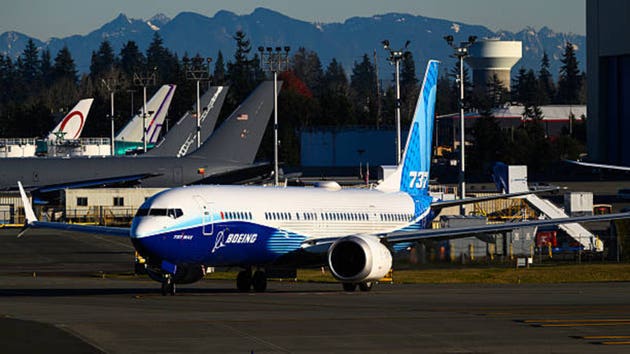
Boeing has reportedly identified a software glitch in its 737 MAX aircraft that could cause the automated navigation system to fail during certain landings. This issue arises when pilots alter their flight paths. The company is working to address this potential problem.

United Airlines (UAL) saw a 2.6% increase in its latest trading session, outperforming the S&P 500, Dow, and Nasdaq. Despite a recent monthly decline in stock price, the company is projected to report an 8.27% year-over-year earnings growth and a 16.68% revenue increase for the upcoming quarter. United Airlines currently holds a Zacks Rank of #4 (Sell) and a Forward P/E ratio indicating a discount compared to its industry.

NASA is in discussions with Boeing regarding at least 10 new Starliner missions, despite the spacecraft's problematic 2024 crewed test flight. This presents a potential opportunity for Boeing to revitalize its Starliner program and secure future revenue, leveraging NASA's need for redundant crew transport systems. However, Boeing must first address significant engineering and management issues, proving Starliner's reliability and ensuring any new contracts are financially viable after past program losses.

Berkshire Hathaway, now run by Greg Abel, has significantly increased its stake in Delta Air Lines while reducing its position in Chevron, a move that contrasts with Warren Buffett's previous aversion to airline investments. This shift comes amidst high jet fuel prices, which have severely impacted the airline industry, yet Berkshire Hathaway appears to be betting on Delta's strategic advantages, such as owning its own refinery, to navigate the challenging market. The article suggests that while fuel costs remain a threat, the futures market anticipates some relief, and Delta is well-positioned among its peers.

United Airlines Holdings Inc. (UAL) stock gained 2.52% on Friday, closing at $113.99. Despite this daily increase, the stock underperformed compared to the broader market, as the S&P 500 Index rose by 0.51% and the Dow Jones Industrial Average increased by 0.93%. This marks the second consecutive day of gains for UAL.
The Boeing Company (NYSE:BA) has received a "Moderate Buy" consensus rating from twenty-three research firms, with an average 12-month price target of $270.95. Despite some recent analyst downgrades, Tigress Financial raised its price target to $305. The company faces challenges with production constraints, leverage, and liquidity, but positive developments include new aircraft orders from Turkish Airlines and Biman Bangladesh Airlines, strengthening its backlog.

US airline trade group Airlines for America has urged the Trump administration to reject increasing China-U.S. flights, citing competitive disadvantages due to limited Russian airspace access for U.S. carriers. This opposition comes as Chinese President Xi Jinping advocates for expanded air links to facilitate travel and trade between the two countries. The current framework allows for approximately 50 weekly round-trip flights, a significant reduction from pre-COVID-19 levels, with U.S. airlines facing extra expenses by rerouting around Russia, unlike some Chinese flights.