

Uber Technologies Inc., commonly known as Uber, is a globally recognised tech company that revolutionized the ride-hailing industry when it was founded in 2009. Headquartered in San Francisco, California, Uber operates in over 70 countries and 900+ metropolitan areas worldwide, making it one of the most extensive ride-sharing platforms globally.
Uber's innovative digital platform connects passengers with drivers of private vehicles under contract with Uber. The company's app, available on several operating platforms, allows users to request a ride from drivers in their area. Payments are also handled through the app, making the whole process cashless and seamless. Since its inception, Uber has facilitated billions of rides, dramatically disrupting the traditional taxi service industry and transforming the way people commute.
However, Uber's business model extends beyond ride-hailing. The company ventured into food delivery with Uber Eats, a service that allows users to order food from local restaurants and have it delivered to their doorstep. Further, Uber Freight connects shippers with truckers, much like how Uber connects drivers and riders.
Uber is at the forefront in the development of self-driving technology with its Advanced Technologies Group (ATG). Through ATG, Uber aims to create autonomous vehicles that would make roads safer and transportation more efficient. Having faced significant backlash and regulatory scrutiny over its business practices, safety issues, and its role in the gig economy, Uber is highly committed to investing in safety and has implemented numerous safety features on its platform.
The stock of Uber Technologies (UBER) trades under the technology sector on the New York Stock Exchange. Uber's IPO, which took place in May 2019, was one of the most high-profile public offerings in recent years, despite it performing below expectations.
Uber views urban mobility as a vast market opportunity and continually innovates its product offerings to tap into this. Despite significant competition, regulatory challenges, and the impact of the COVID-19 pandemic, Uber's agility and innovation have helped it maintain a leading position in the ride-hailing market. With its vision to bring transportation for everyone, everywhere, Uber continues to drive change in the mobility space.
Income statement
Balance sheet statement
Cash flow statement
Current assets / Current liabilities
Equity / Debt / Cash
Dividends

This article summarizes major tech news, including Qualcomm's renewed patent license with Apple and its new AI-focused Snapdragon chips, designed to compete with Apple's A20 Pro. It also highlights Apple's reported developments in a screen-free fitness tracker and an AI-heavy pendant, alongside its marketing of new Macs for cost-effective AI model execution. Additionally, an entrepreneur suggests Apple should consider acquiring companies like Disney or Uber.

McDonald's has launched a redesigned tiered loyalty program aimed at re-engaging 150 million infrequent customers. The program includes partnerships with Uber and Disney+ for ride credits and subscription benefits, leveraging its global digital and loyalty platform. This initiative seeks to increase order frequency and provide richer customer data to franchisees, though its impact on the value-menu strategy remains a key factor for investors to consider.

The American Express Platinum Card, despite its high $895 annual fee, offers a welcome bonus that could be worth over $1,750 in travel rewards, potentially covering the annual fee twice over. Applicants can check their eligibility and exact offer amount without impacting their credit score initially. Beyond the welcome bonus, the card provides over $3,500 in annual travel and lifestyle benefits, making it attractive to frequent travelers and big spenders.
This article compares the quarterly revenue trends of Alibaba Group and Uber Technologies, highlighting their business models and recent financial performance. It discusses how both companies are navigating the AI boom, with Alibaba investing heavily in AI infrastructure affecting its net income, while Uber expands its autonomous vehicle initiatives and grows its delivery services. The piece also provides a table of their quarterly revenues from Q3 2024 to Q2 2026.
Tesla is set to unveil its long-delayed next-generation Roadster on October 1, nearly a decade after its initial presentation. This unveiling follows closely after the launch of Cybercab rides, aiming to reinforce Tesla's innovation narrative and keep investor and consumer attention on its expanding product line. However, the Roadster's history of delays and the financial pressures on Tesla's core automotive business present significant risks, making a credible production timeline crucial for restoring investor confidence.

Serve Robotics Inc (SERV) saw its stock short interest increase to 38.59% of the float as of September 15th, representing a 4.66% rise from August 31st. This equates to 32,083,311 shares shorted, which would take an estimated 11.45 days to cover. The article also details recent hedge fund activity, with some institutions like Blackrock increasing their positions while others like Uber Technologies removed shares, and highlights insider selling activity and analyst ratings with a median price target of $16.6.

Lucid Group (LCID) saw its short interest rise to 65.39% of the float as of September 15th, an 18.65% increase from August 31st, with short sellers needing an estimated 8.12 days to cover. While 208 institutional investors added LCID shares in Q2 2026, insiders have made two sales and no purchases in the last six months. Analysts have set a median price target of $13.0 for LCID.
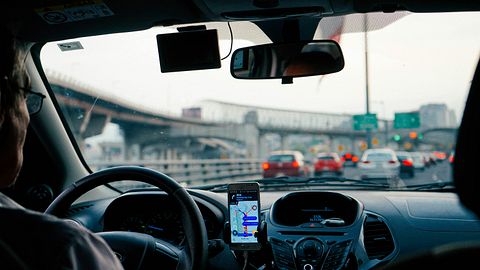
This article examines whether Uber's competitive advantages can withstand the emergence of autonomous vehicles. While Uber's strong network of riders and its investments in the autonomous ecosystem present significant opportunities, the threat of robotaxi companies building their own platforms and the slow adoption rate of autonomous vehicles pose challenges to Uber's long-term moat. The company's ability to remain indispensable to autonomous vehicle developers will determine its future success.
This article examines whether Uber's economic moat can withstand the emergence of robotaxis. It discusses Uber's financial health, extensive network of riders, and strategic investments in autonomous vehicle partnerships as strengths. However, it also highlights the threat of autonomous vehicle companies potentially bypassing Uber to establish direct consumer relationships, and the slow adoption rate of robotaxis.