

United Parcel Service Inc. (UPS) is an American multinational package delivery and supply chain management company, recognized as one of the world's largest package delivery companies. Headquartered in Sandy Springs, Georgia, USA, UPS is renowned for its trademark brown delivery trucks, uniforms, and its iconic shield logo.
Founded on August 28, 1907, by 19-year-old James E. Casey as the American Messenger Company in Seattle, Washington, the company initially focused on package delivery to retail stores. Over time, it rebranded to Merchants Parcel Delivery and then to its current title in 1919. Today, UPS has significantly expanded its portfolio, offering services including logistics, freight forwarding, supply chain management, e-commerce, global trade, financial services and more. It has gained a sterling reputation for delivering packages worldwide safely, reliably, and in a timely manner.
The company operates through three business segments: U.S. Domestic Package, International Package, and Supply Chain & Freight. As of 2022, it has operations in over 220 countries and territories worldwide, supporting the flow of goods, funds, and information in more than 200 countries and territories.
One distinguishing trait of UPS is its fleet. The company's "rolling brown fleet" includes over 123,000 package cars, vans, tractors, and motorcycles, including more than 10,000 alternative fuel and advanced technology vehicles. Also, UPS Air Cargo is one of the world's largest airlines, with more than 500 aircraft.
The role of UPS in the global economy was quite evident during the COVID-19 crisis. They played a critical role in vaccine distribution, illustrating the company's commitment to society and its effective operations. UPS is particularly committed to sustainability, setting ambitious goals to reduce greenhouse gas emissions and working towards powering its fleet with 40% renewable electricity sources by 2025.
UPS has an impressive track record of performance and service, being ranked No. 43 in the 2019 Fortune 500 list of the largest United States corporations by total revenue.
In conclusion, United Parcel Service Inc., commonly known as UPS, is a pioneer in global logistics and a key driver of the world's ecommerce boom. By offering a broad range of solutions that enhance business processes and consumer convenience, UPS continues to uphold its reputation as a trusted, reliable, and innovative package delivery solution across the globe.
Income statement
Balance sheet statement
Cash flow statement
Current assets / Current liabilities
Equity / Debt / Cash
Dividends

Microsoft is planning to construct a new $340 million data center in Floyd County, Georgia. This facility will encompass three buildings totaling up to 1.7 million square feet, situated on a parcel of land larger than Piedmont Park. The project signifies Microsoft's continued investment in data infrastructure within Georgia.
BOCHK Asset Management Ltd reduced its stake in Coca-Cola Company (NYSE:KO) by 39.7% in the third quarter, selling 26,200 shares and leaving it with 39,800 shares valued at $3.43 million. Other institutional investors also adjusted their holdings, while analysts maintained a "Moderate Buy" rating with a consensus price target of $97.26. Coca-Cola also announced a quarterly dividend of $0.53 per share, payable on December 15th, and several insiders sold shares to cover tax obligations.
Sumitomo Mitsui Trust Group Inc. reduced its stake in The Williams Companies, Inc. (WMB) by 2.5% in the third quarter, selling 67,691 shares, though it still holds over 2.5 million shares valued at $176 million. Other institutional investors either increased or initiated positions in WMB, while company insiders have recently sold shares. Analysts maintain an overall "Buy" rating for Williams Companies, with a consensus target price of $86.06.

TFI International Inc. (TFII-T) is facing significant challenges in turning around its U.S. less-than-truckload (LTL) business, acquired from UPS five years ago for US$800-million. The unit's operating income dropped 43% in the third quarter, impacting TFI's overall earnings and causing its shares to tumble 17%. CEO Alain Bédard attributes the struggles to inherited corporate culture and operational inefficiencies, and plans include new executive leadership and management changes to improve profitability.

Newell Brands, parent company of Rubbermaid and Yankee Candle, is planning another round of price increases to offset $220 million in inflation costs incurred this year. The company's CEO stated that nearly half of these costs stemmed from resin and finished goods. This move aims to mitigate the impact of rising inflation on their operations.

Despite a significant fuel shock in 2026 and concerns about domestic cabin demand, Delta Air Lines returned 41.2% over the past year. Investors had differing views on its fair value, with optimists focusing on cost management and loyalty, and pessimists on margin pressure. The company managed to sustain pricing power and disciplined capacity, demonstrating resilience even as net income fell due to higher fuel costs.

C.H. Robinson is moving forward with its proposed acquisition of RXO, with merger filings submitted in the U.S., Canada, and Mexico, and closing still expected in the first half of 2027. The article advises carriers and shippers to focus on practical implications like compatible freight, service continuity, and commercial terms, as RXO emphasizes that both companies will operate independently and compete for bids until the transaction closes. While cost synergies are forecast, the immediate impact on freight rates or carrier payments remains unclear, urging stakeholders to prioritize clear communication and documentation of existing terms.

TFI International's stock dropped 17% after the company missed earnings expectations, provided a disappointing fourth-quarter forecast, and lost a major US$300-million contract with UPS. Despite a 25% increase in net income and 13% rise in revenue, investors focused on the challenges in its U.S. less-than-truckload (LTL) segment and rising labor costs. CEO Alain Bédard expects a turnaround in 2027, though analysts express skepticism regarding the ease of fixing pricing and density issues.
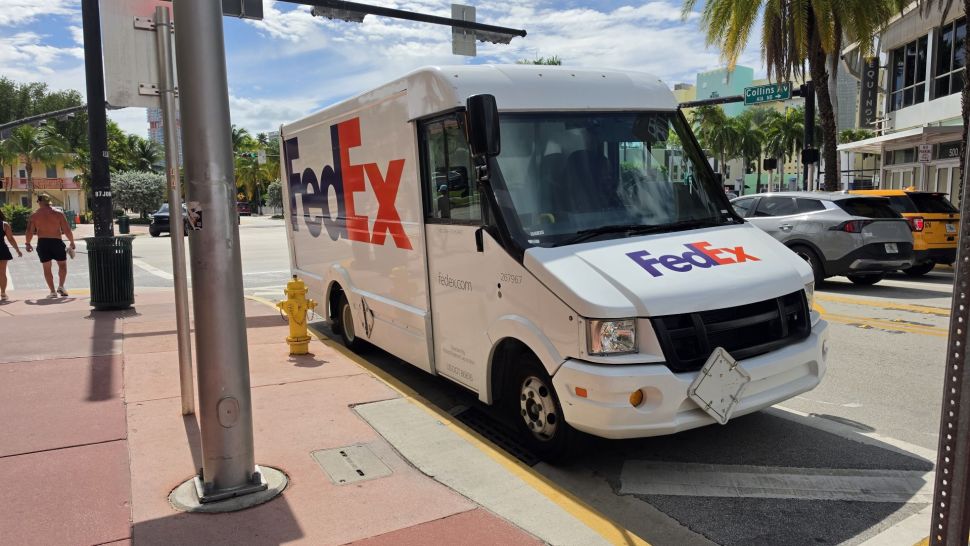
FedEx reported strong third-quarter results with a 12% revenue increase to $22.9 billion, driven by higher volumes and pricing for premium B2B and B2C shipping services, with fuel surcharges accounting for a quarter of the growth. Despite expectations for lower domestic margins due to rising labor and outsourced trucking costs, the company anticipates a strong peak season and has raised its full-year outlook. FedEx is also continuing its Network 2.0 initiative to consolidate networks and optimize operations, aiming for $2 billion in annual savings by the end of 2027.