

Workday, Inc. (WDAY), is globally recognized as a leading provider of cutting-edge enterprise cloud applications for finance and human resources. Founded in 2005, the company is reputed for delivering financial management, human capital management (HCM), planning, and analytics applications designed for the world's largest organizations.
Headquartered in Pleasanton, California, Workday boasts over 7,300 customers worldwide including large enterprises, educational institutions, and government agencies. Several well-known global corporations such as Netflix, Amazon, and Bank of America have turned to Workday for their human resources and financial management needs.
The foundation of Workday's success lies in its innovative Software as a Service (SaaS) model. This software distribution model allows data to be accessed from any device with an internet connection and a web browser. It eliminates the need for organizations to install and run applications on their own computers or in their own data centers, reducing expenses on hardware, software, and the additional staffing needed for enterprise software upkeep.
Workday’s human capital management software serves as a unified system that brings together a wide array of HR functionality, including talent acquisition, time tracking, payroll, and compensation management. This software provides insights, global consistency, and the ability to monitor the entire workforce from a single, unified interface.
On the finance side, Workday provides a complete suite of applications to support core accounting and finance functions like procurement, expenses, and projects. The platform allows for complete financial consolidation, reporting, and analytics for various industries.
The company has shown a strong commitment to continuous innovation since its inception. In recent years, Workday has increasingly incorporated new technologies like machine learning, blockchain, and augmented reality into its products, redefining the way enterprise software is delivered.
Workday Inc. is not just a SaaS provider but also places a strong emphasis on its responsibility towards society, environment, and its employees' wellbeing. Their dedication to corporate social responsibility is evident in their commitment to developing sustainable and regenerative business practices.
The company’s stock trades on the NASDAQ Global Select Market under the symbol WDAY. Workday has experienced a consistent increase in revenue, reporting $4.32 billion in the fiscal year 2021, marking a growth of nearly 20% as compared to the prior year.
The commitment to fostering innovation, serving customer needs, and championing sustainability makes Workday a disruptive force in the tech industry, transforming the way businesses operate and compete in the digital age.
Income statement
Balance sheet statement
Cash flow statement
Current assets / Current liabilities
Equity / Debt / Cash
Dividends

Kforce reported strong third-quarter results, with revenue beating expectations and technology growth accelerating. The company highlighted expanding margins, record Consulting Solutions activity, and positive fourth-quarter guidance, indicating a healthier operating environment despite measured client spending and mixed labor data. Kforce's growth rates suggest market share gains, supported by disciplined costs and a constructive longer-term outlook.
Salesforce shares dropped 5.4% on Thursday, closing at $228.96, as part of a broad sector-wide selloff affecting other software companies like Datadog and Workday. This synchronized decline suggests broader market pressures rather than company-specific concerns, with investors potentially reacting to profit-taking, valuation worries, or macro-economic shifts. The pullback highlights the software sector's vulnerability to market rotation and raises questions about whether current valuations are supported by fundamentals.

Insperity reported strong Q3 2026 financial results, with gross profit per worksite employee up 8% and adjusted EPS improving by $0.42 per share year-over-year. The company's margin recovery plan is effectively addressing healthcare costs and operating expenses, while strategic initiatives include integrating AI to enhance HR solutions and client relationships. Insperity expects relatively flat sequential growth in paid worksite employees for Q4 2026, with full-year adjusted EBITDA projected to increase significantly by 48% to 63% over 2025.

ServiceNow Inc. (NYSE: NOW) experienced its steepest one-day stock drop in history, plummeting 23.2% and wiping out $36 billion in market value despite raising its AI sales target and beating guidance. The decline was attributed to a two-cent earnings miss caused by acquisition-related interest expenses, and a slowdown in current remaining performance obligations (cRPO) growth, signaling investor concern that AI might be altering software sales models. This selloff impacted other software stocks, with Wall Street analysts trimming targets but largely maintaining bullish ratings, focusing on future contracts over AI headlines.
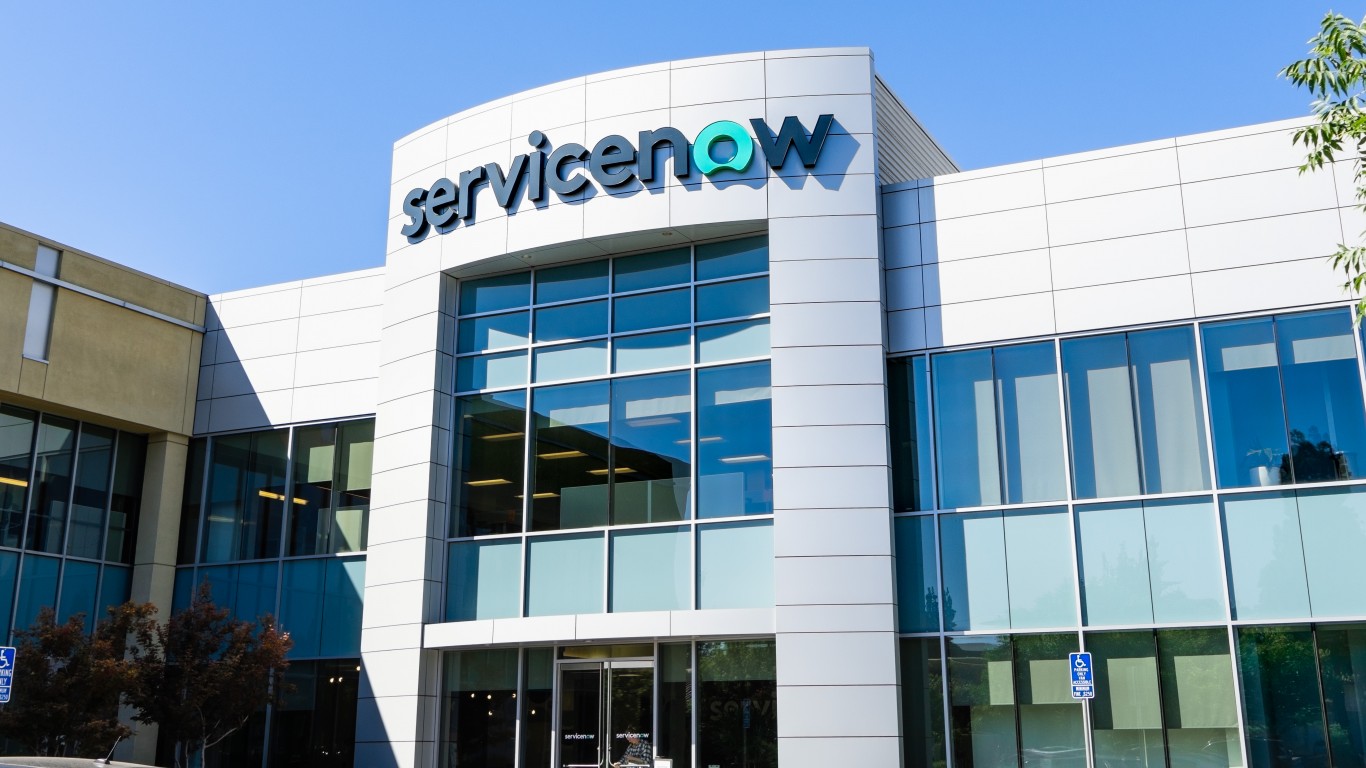
ServiceNow's stock plummeted 19% despite beating revenue estimates and raising its AI contract target, due to a forecast of slower growth in contracted revenue. This negative outlook for future sales in enterprise software also caused Salesforce, Workday, and Adobe to fall. The market is questioning whether ServiceNow's AI deals will effectively convert into long-term subscription growth.
ACI Worldwide is collaborating with Circle Internet Group to test USDC stablecoin settlement in Latin American payments, starting with Colombia. This initiative aims to integrate digital assets with traditional banking infrastructure, aligning with ACI's strategy for cloud-native and real-time payment platforms. The move presents both an opportunity to broaden ACI's service offerings and a risk of increased competition from crypto-native providers.

ServiceNow Inc. (NYSE: NOW) is seeing its stock decline ahead of its earnings report, despite analysts highlighting strong AI opportunities and broader platform adoption. Cantor Fitzgerald and BNP Paribas analysts both reiterated bullish ratings, citing strong enterprise demand for AI governance and an expansion of ServiceNow's platform beyond IT to areas like HR and finance. However, concerns about the company's premium valuation and customer cost sensitivity remain key risks.

Kforce Inc. reported strong Q3 2026 financial results with revenues of $357.8 million, exceeding guidance and showing a 7.5% year-over-year increase, primarily driven by 7.8% growth in its technology business due to demand for AI-related data, digital, and cloud projects. The company's strategy emphasizes organic growth, investment in high-margin consulting solutions, and leveraging AI for improved productivity and client offerings, leading to positive Q4 2026 revenue guidance with low single-digit sequential growth. Management highlighted the expansion of high-margin consulting engagements and offshore capabilities as key drivers for margin improvement and competitive advantage.