

Exelon Corporation is a prominent American Fortune 100 energy company headquartered in Chicago, Illinois. Established in October 2000 by the merger of PECO Energy Company and Unicom Corp, it is one of the largest competitive U.S. power generators, with a vast portfolio that includes nearly 32,000 megawatts of nuclear, wind, solar, natural gas, and hydroelectric generated power.
Exelon Corporation operates through several significant segments, including Mid Atlantic, Midwest, New England, New York, Electric, Gas, and other segments. It is also involved in the energy delivery business and operates an array of power generating facilities and nuclear energy operations, making Exelon the largest nuclear operator in the United States.
Exelon operates in 48 states, the District of Columbia and Canada. The company provides electricity and natural gas products and services to approximately 10 million customers. It also owns six regulated utilities, including BGE, ComEd, PECO, Atlantic City Electric, Delmarva Power, and Pepco.
In addition to its primary business focused on the generation, distribution, and selling of electricity and natural gas, Exelon operates a commercial division, Exelon Generation, that sells electricity to wholesale and retail customers. This includes local governments, universities, hospitals, and other large commercial entities.
Exelon has an active involvement in the fight against climate change and leads the utilities sector in clean energy production. They have made substantial investments in low-carbon and no-carbon emission power generations and continuously incorporate sustainable and environmental-friendly practices into their operations, efforts that distinguished them as one of the “100 Most Sustainable Companies” by Barrons in 2020.
In the realm of community involvement, the Exelon Foundation, the company's philanthropic wing, is known for its significant contributions to improve the quality of life in the communities where their customers and employees live and work. Education, environment, and economic development are the core issues the foundation is committed to addressing.
Exelon is listed under the ticker symbol "EXC" on the New York Stock Exchange. Its strong financial health, commitment to innovation and sustainability, and its essential role in the U.S. power industry make it a significant player in the energy sector. Exelon Corporation’s mission to "be the leading diversified energy company - by providing reliable, clean, affordable and innovative energy products”, shows its dedication towards creating a clean and sustainable energy future.
Income statement
Balance sheet statement
Cash flow statement
Current assets / Current liabilities
Equity / Debt / Cash
Dividends
Exelon Corp. (EXC) stock decreased by 1.20% to $40.20, marking its fifth consecutive day of losses, despite a general downturn in the stock market. The S&P 500 Index (SPX) fell by 0.02% and the Dow Jones Industrial Average (DJIA) fell by 0.31%.

The U.S. Energy Department announced a $2 billion investment to upgrade the nation's aging power grid, aiming to boost electricity capacity by 23 gigawatts—enough to power 16 million homes. This initiative, part of President Trump's administration's efforts to combat potential blackouts due to surging AI-driven energy demand, will fund 31 projects across 26 states. The projects will incorporate new technologies like sensors to improve transmission reliability and reduce electricity costs for millions, utilizing funds from the bipartisan infrastructure law.

Entergy Corporation (ETR) is a vertically integrated utility operating in the Gulf Coast region. An analyst report from Argus, dated September 9, 2026, indicates that the company's guidance suggests strong earnings growth in the second half of 2026. The report covers Entergy's electric operations through its five regulated subsidiaries, including generation, transmission, and distribution.
Exelon Corp. (EXC) shares fell by 2.66% to $40.69 on Wednesday, marking its fourth consecutive day of losses. Despite this daily decline, the stock reportedly outperformed its competitors during a generally negative trading session for the broader market, which saw the S&P 500 Index and Dow Jones Industrial Average also decrease.
Entergy recently hosted a panel discussion at the Global Black Economic Forum Business Summit during the ESSENCE Festival of Culture, focusing on the critical role of women in shaping the utility industry's future. Moderated by Entergy's John Hudson, the panel featured industry leaders Colette Honorable (Exelon) and Nicole Daggs (NextEra), who discussed grid modernization, clean energy transition, evolving customer expectations, and the importance of resilient operations. The discussion also highlighted preparing the next generation of energy professionals, emphasizing women's leadership, and addressing topics like AI, workforce readiness, and community trust.

The article highlights three utility stocks—Exelon (EXC), PG&E (PCG), and Centuri Holdings (CTRI)—that are positioned to perform well despite the Federal Reserve's recent interest rate hike, the first since 2023. These companies are identified as having strong financial health, with a times interest earned ratio greater than 1, and are focused on infrastructure investments to meet rising demand, particularly from data centers. All three currently hold a Zacks Rank of #3 (Hold) and a VGM Score of A or B, making them attractive options for investors in a rising interest rate environment.
Alphabet, Exelon, and Patterson-UTI recently paid dividends to their shareholders, totaling $0.74 per share across two September trading days. Each company operates in a different sector and has distinct dividend policies, reflecting their unique business strategies and financial health. This coincident payout illustrates how a diversified income portfolio delivers returns through various underlying business fundamentals.
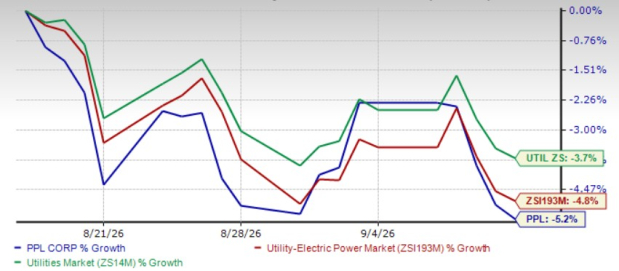
PPL Corporation's shares have underperformed its industry and the Zacks Utilities sector in the past month, facing challenges such as competition in transmission, rising operating expenses, and execution risks from capital expenditures. Despite these headwinds, the company is benefiting from increasing data center demand in Pennsylvania and Kentucky, leading to a planned $23 billion investment in regulated infrastructure from 2026-2029 and efforts in clean energy and cost management. While PPL's earnings estimates are growing and it utilizes less debt than peers, its stock trades at a premium with a lower return on equity compared to the industry, suggesting investors might await a more attractive entry point.